No Playing in Board and Marker
Wooden sign on suburban shopping street reminds children not to play on the staircase. It’s dangerous.
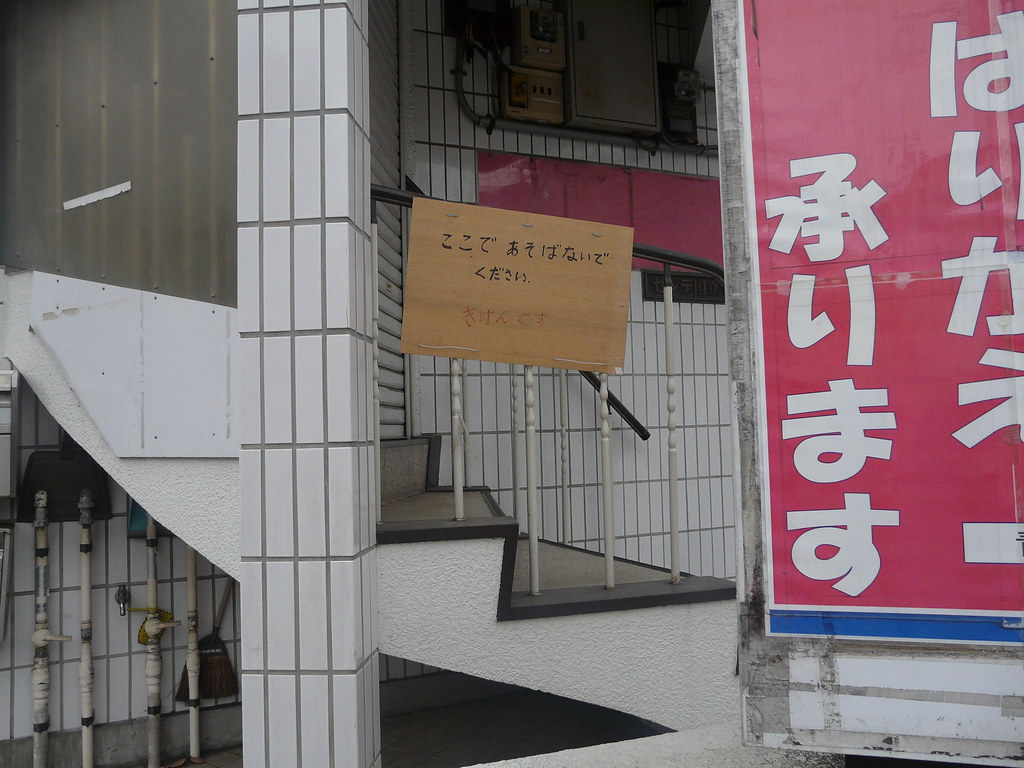
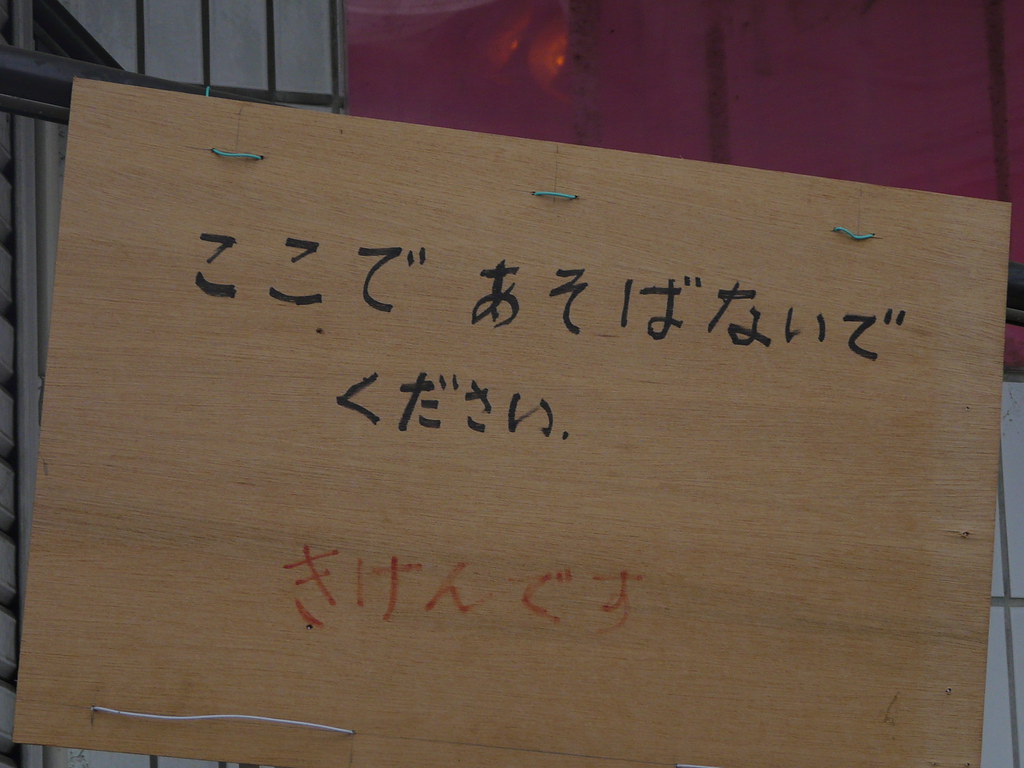
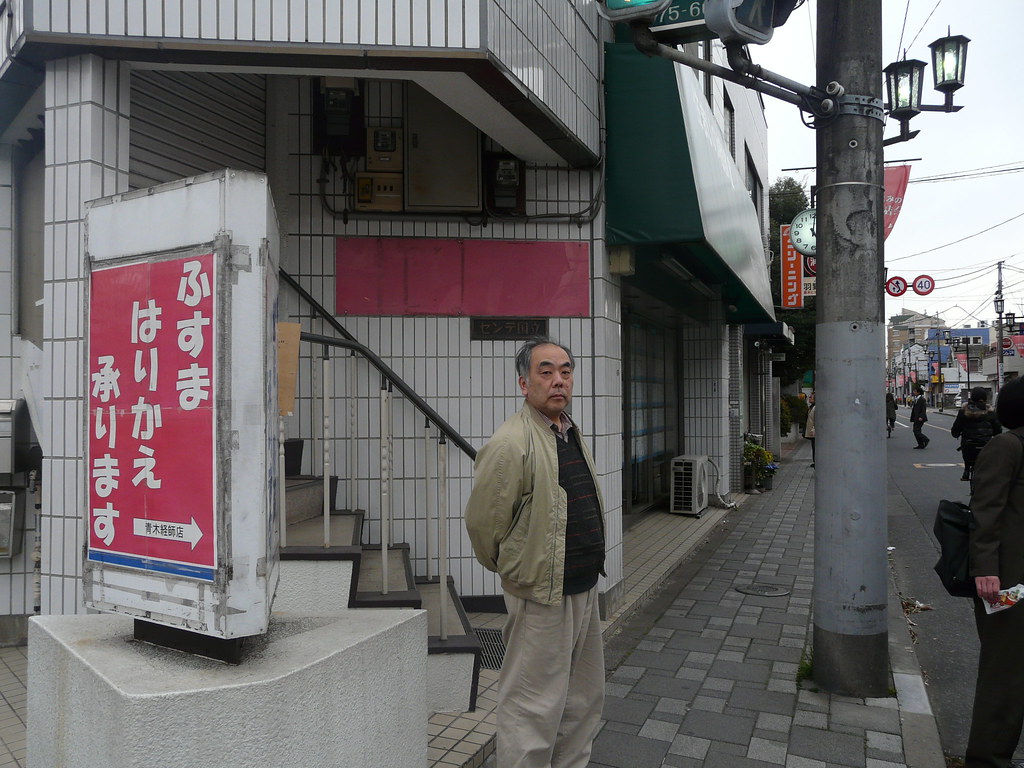
Materials: Wooden Board, Marker
Location: Kunitachi, Tokyo
Wooden sign on suburban shopping street reminds children not to play on the staircase. It’s dangerous.
Materials: Wooden Board, Marker
Location: Kunitachi, Tokyo
Skipping rope with one rope and two people requires an extra set of hands. A power pole stabilizing cable does the trick.
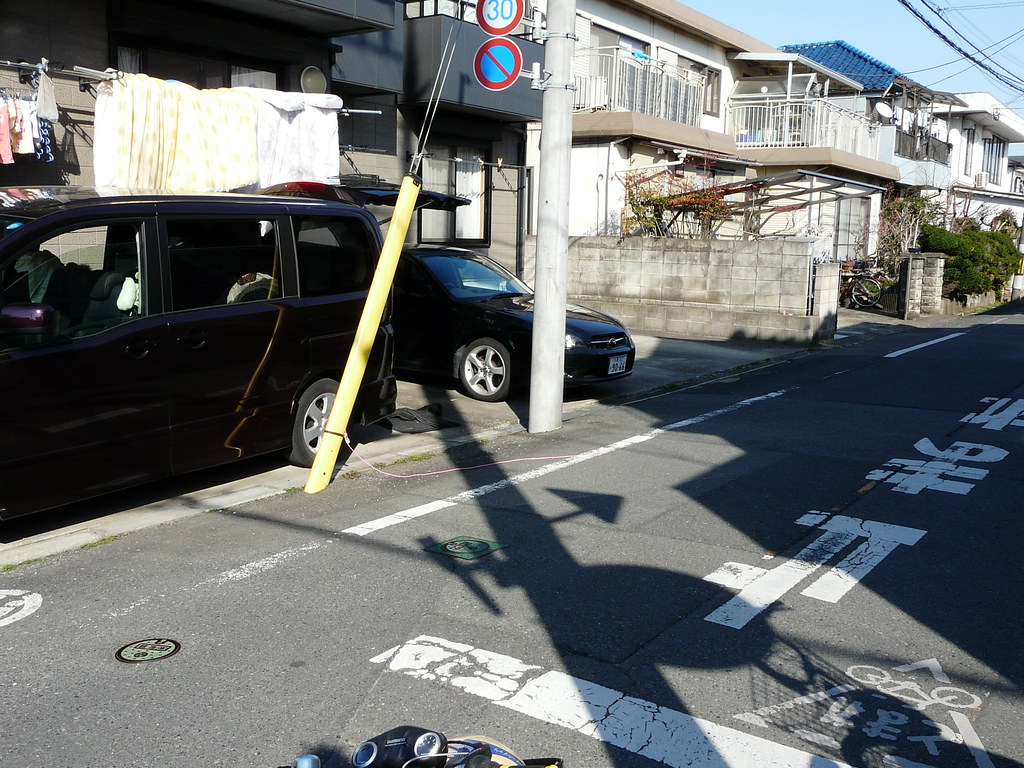
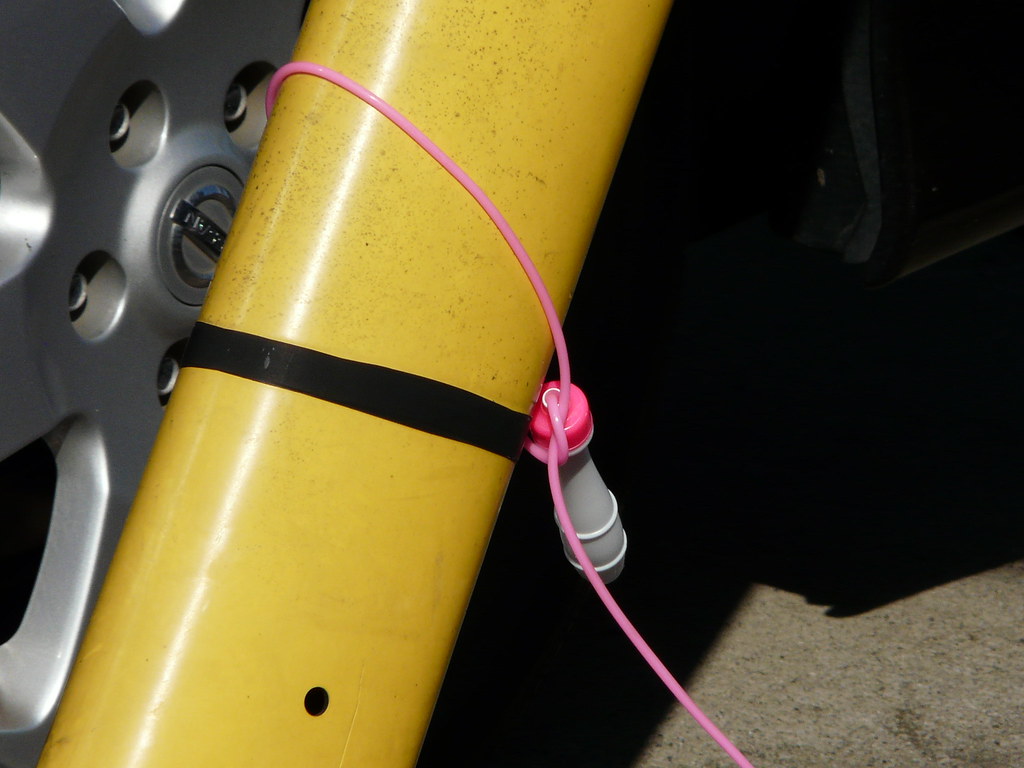
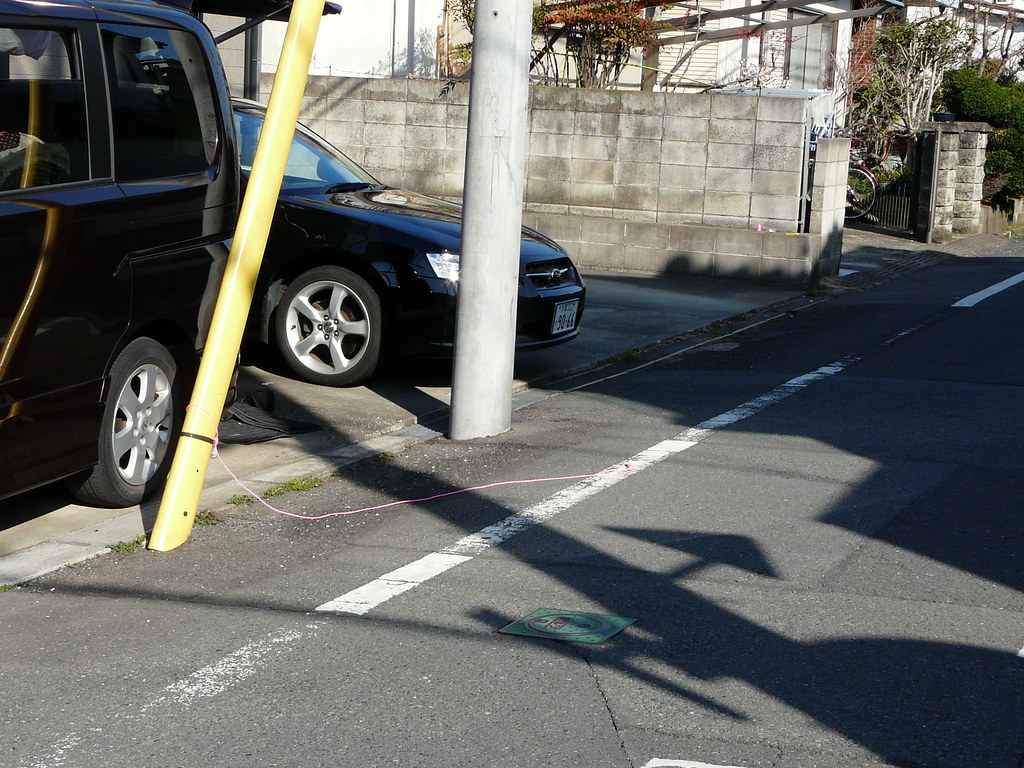
Materials: Power Pole
Location: Akishima, Tokyo
Children play camp – an upturned beer crate rocks, concrete and plants form a roaring campfire.
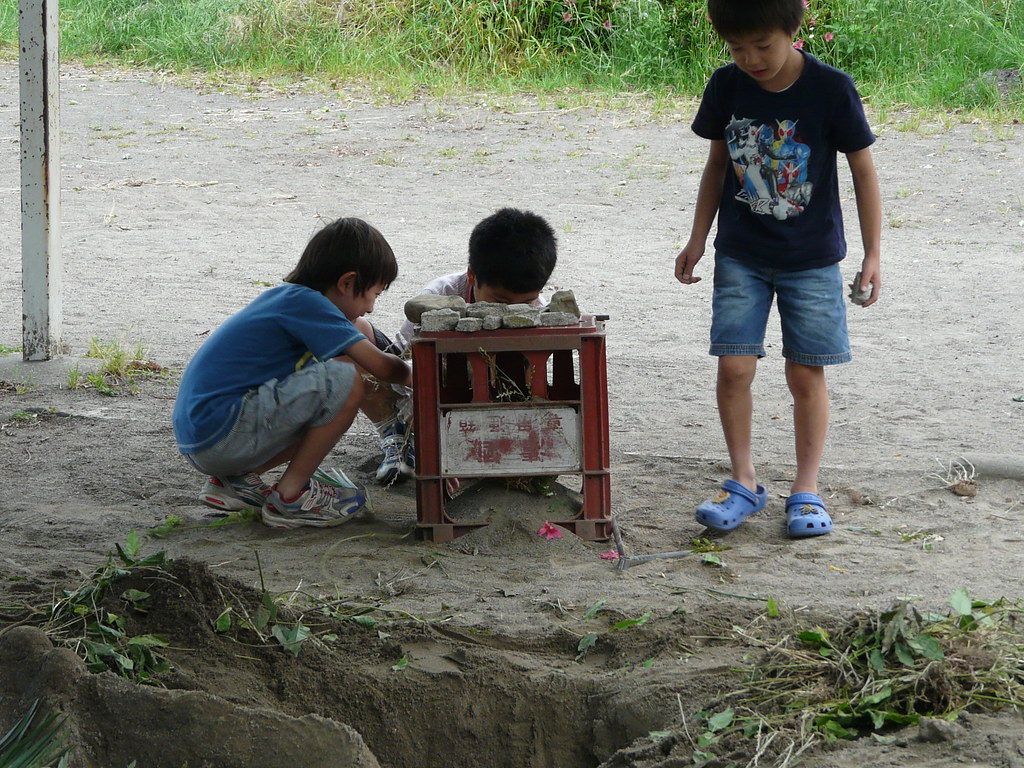
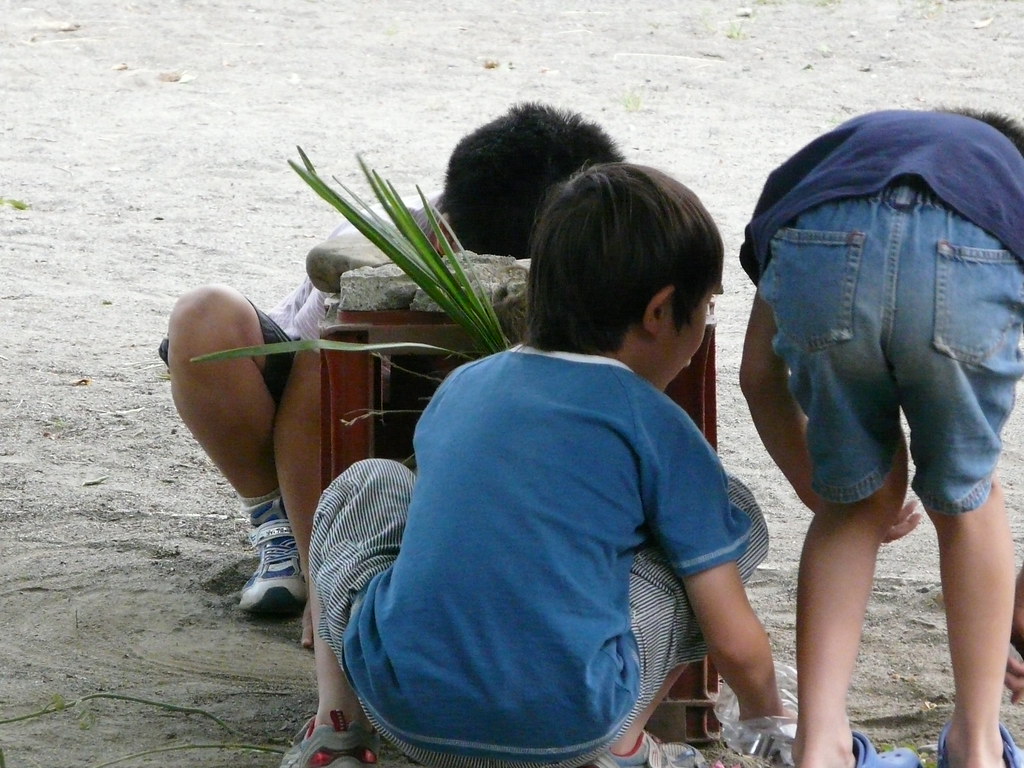
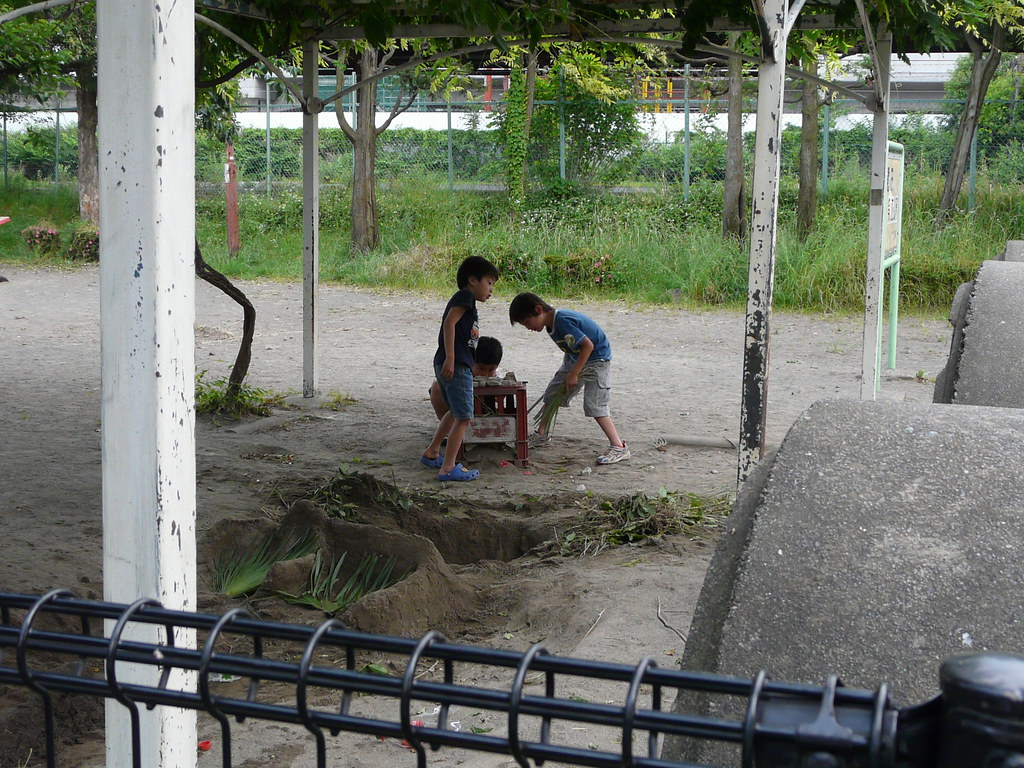
Materials: Beer Crate, Rocks, Concrete, Plants
Location: Tachikawa, Tokyo
Cracks in station seating repaired with tape. The gaps between three of the seats are also covered with tape..I wonder why…
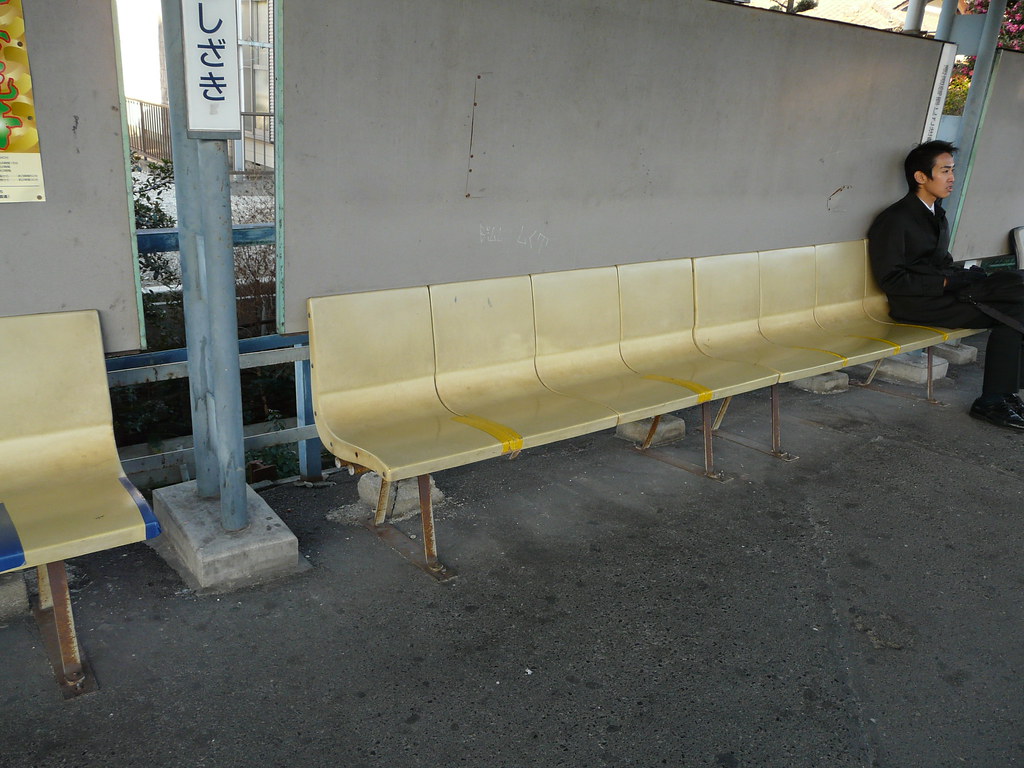

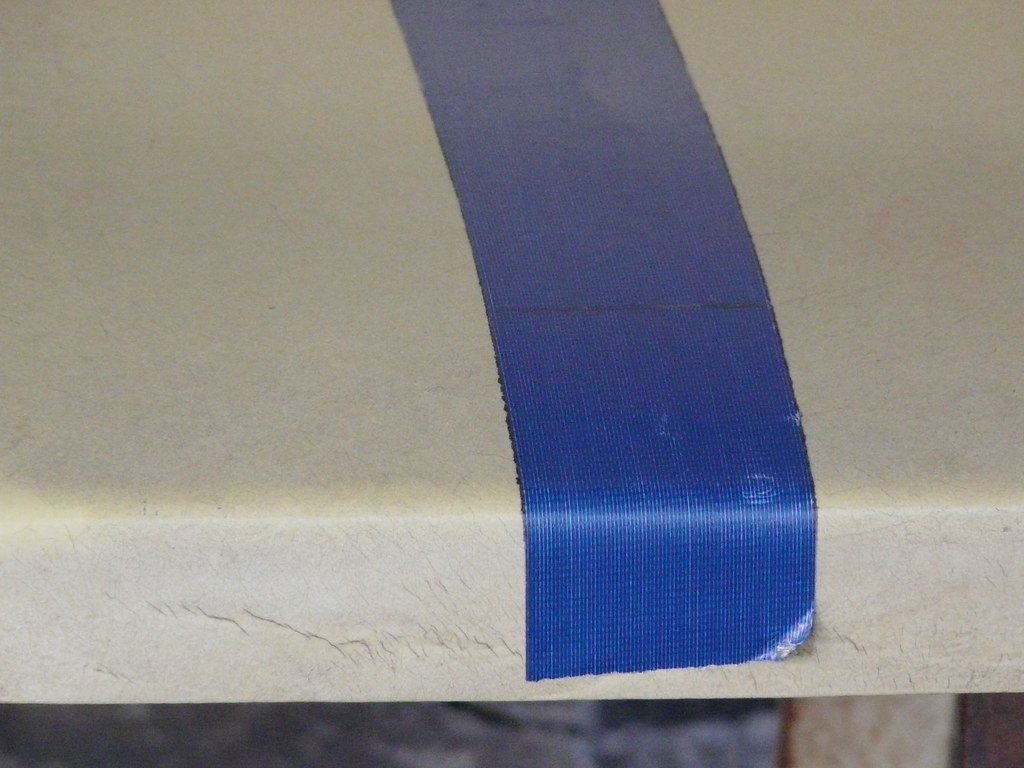
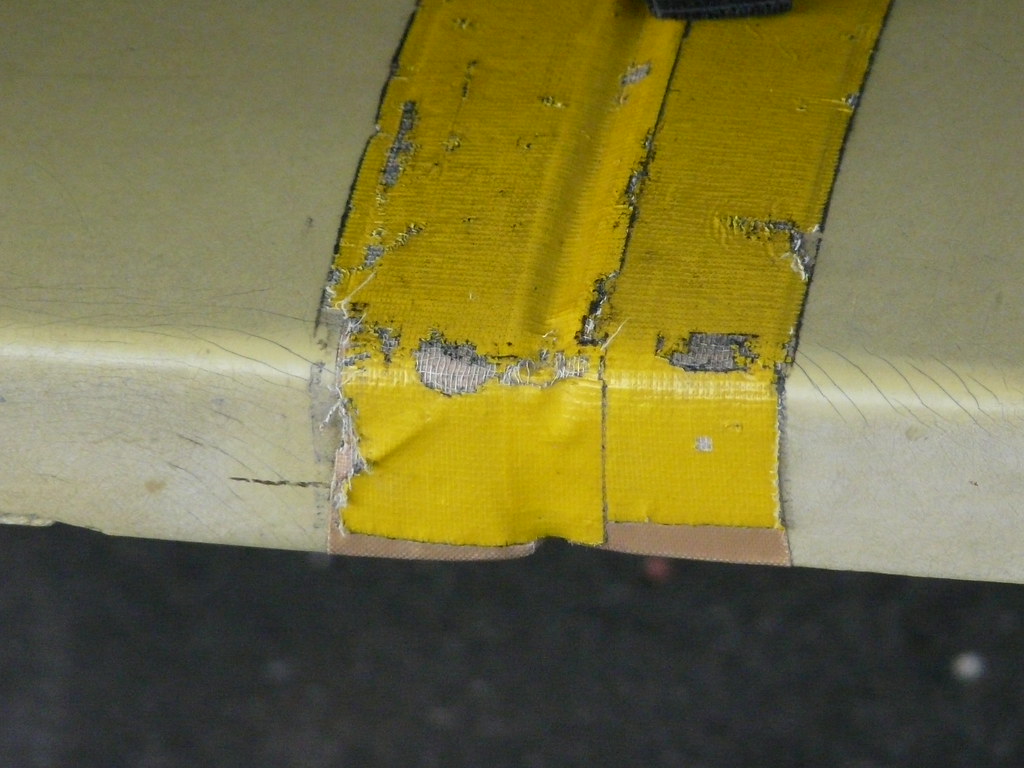
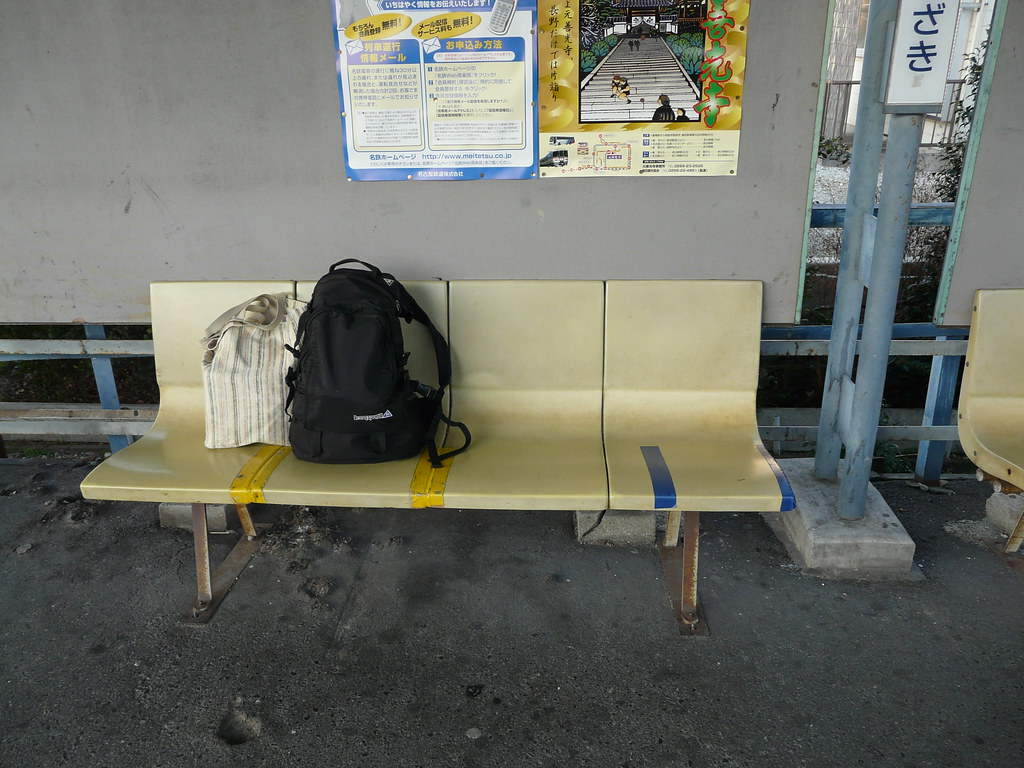
Materials: Duct Tape
Location: Nagoya, Aichi
Hand made cushions for winter station benches in Gifu (courtesy of Tajimi High School).
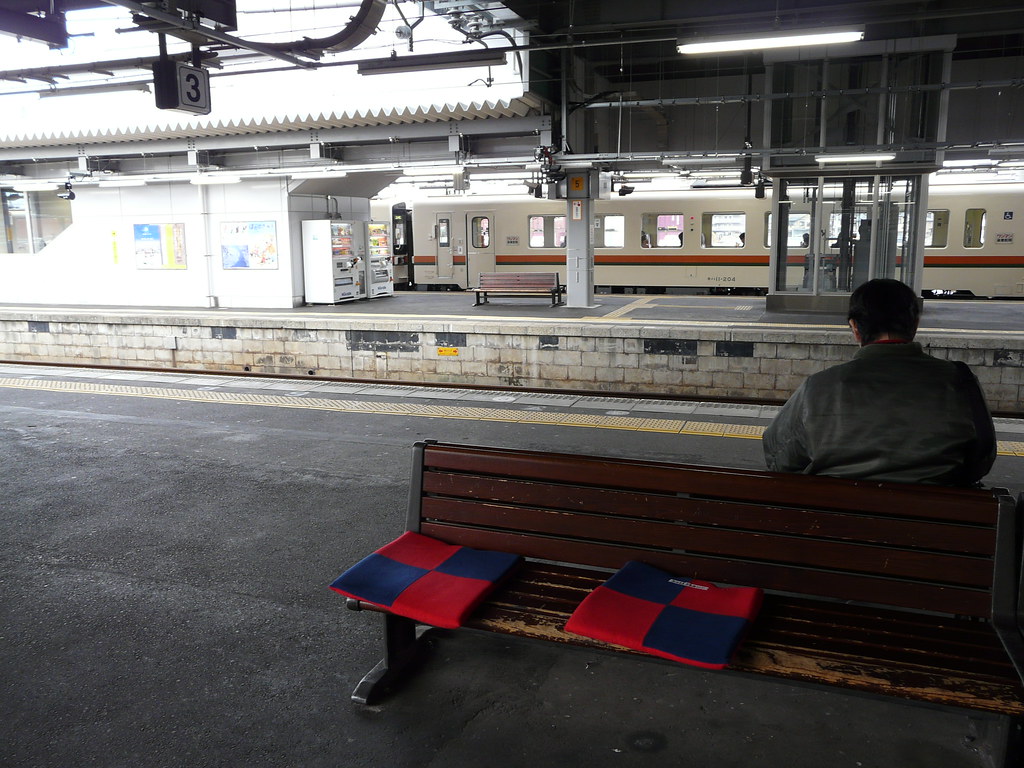
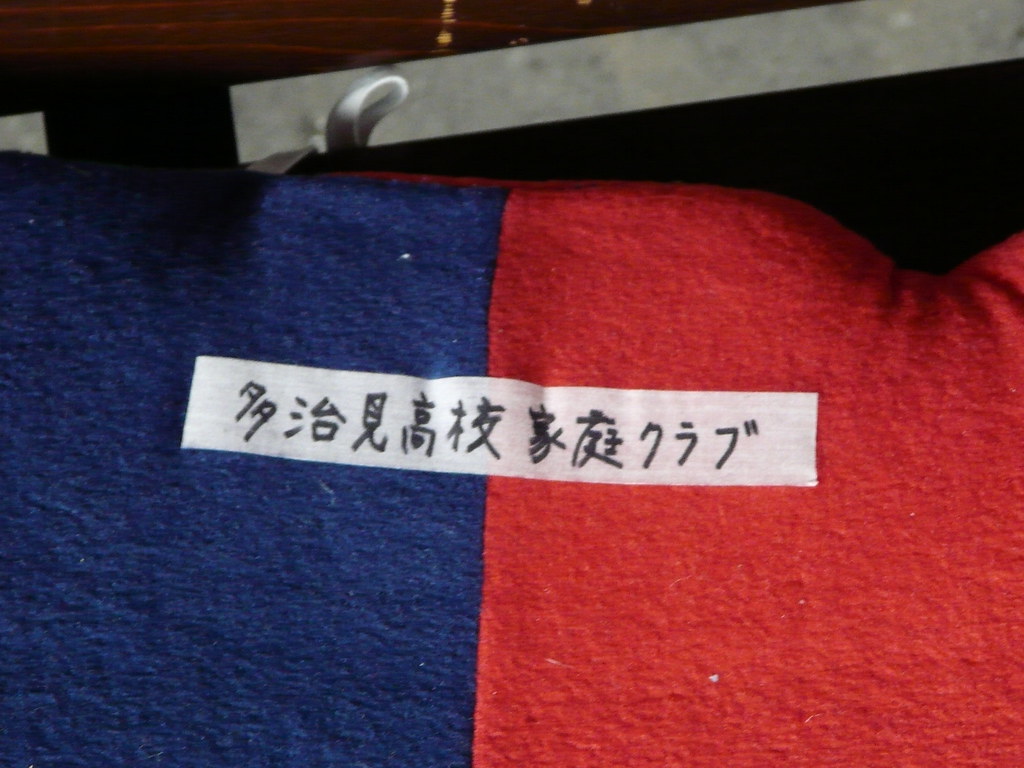
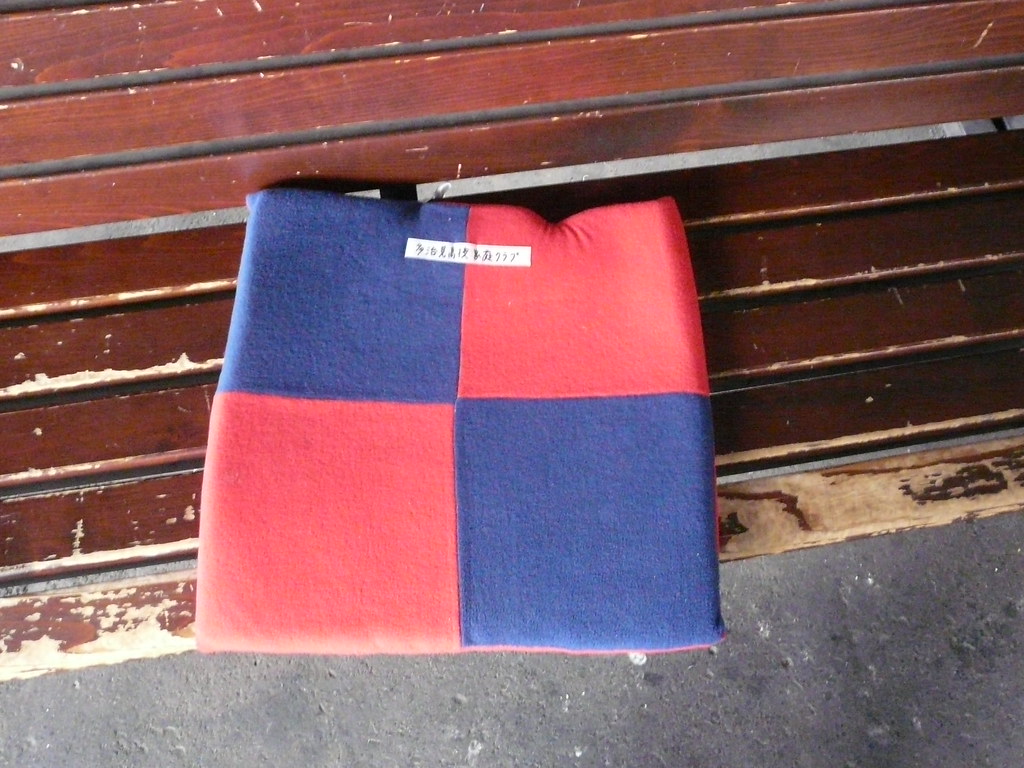
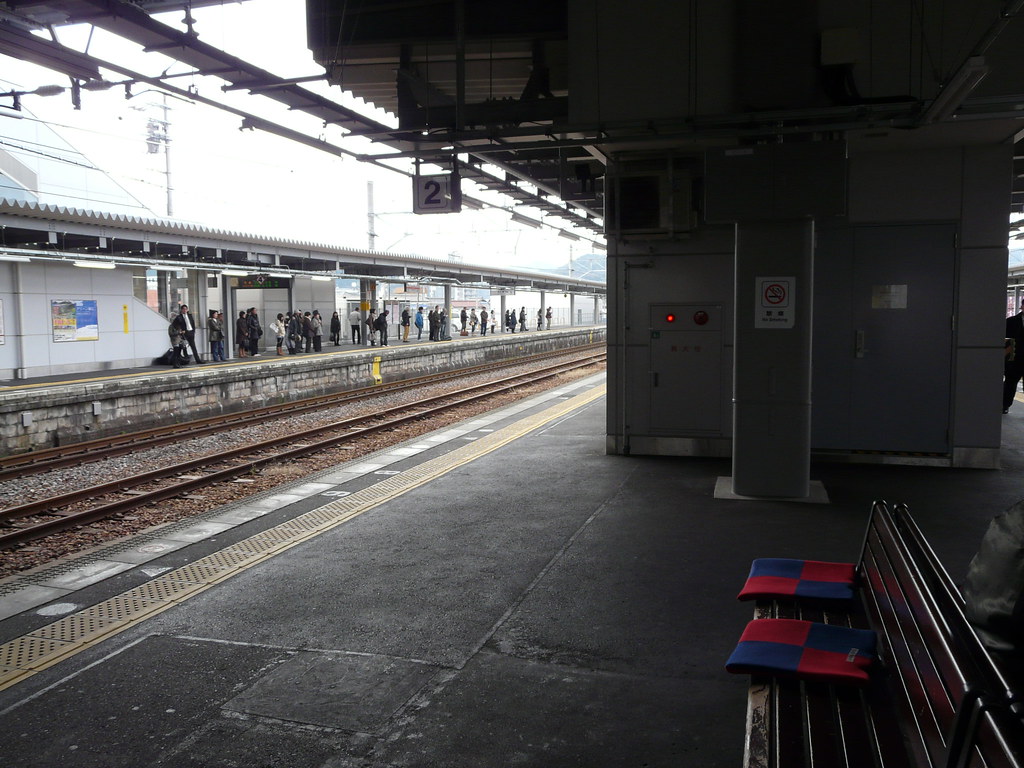
Location: Tajimi, Gifu
This sign in Shibuya station illustrates how station employees have ‘fixed’ ticket gate signage at the request of users.
In this case, existing signage left passengers unclear as to whether the station could be exited from the ticket gate. This was fixed by installing two signs pointing to well known exits/meeting spots.
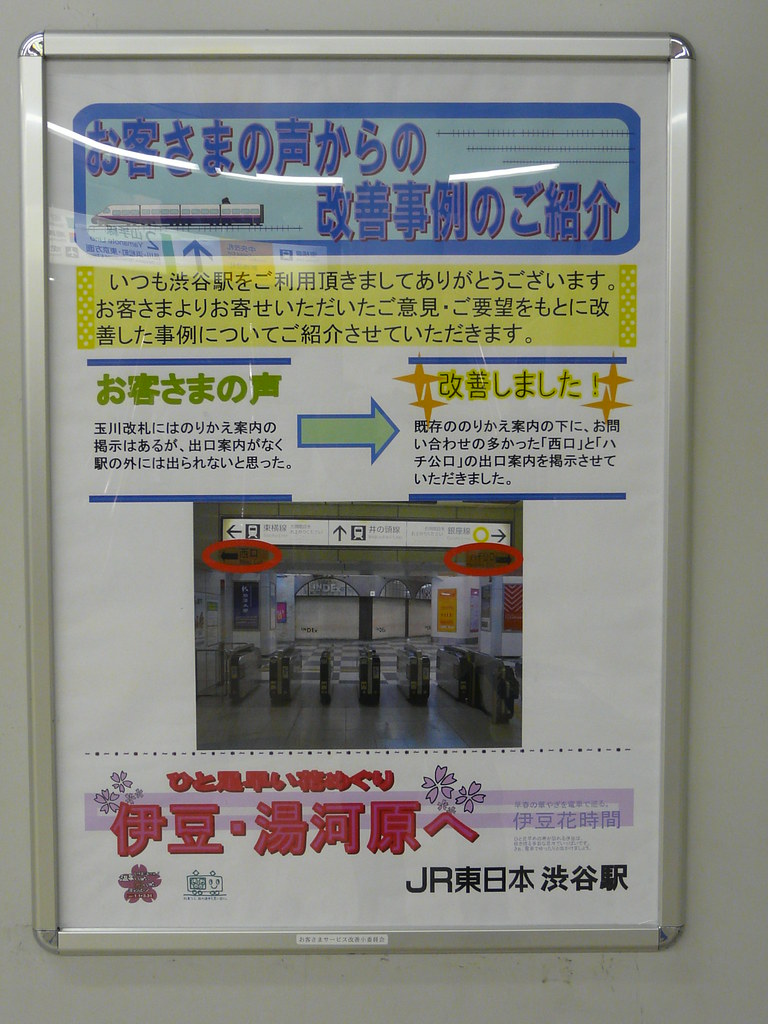
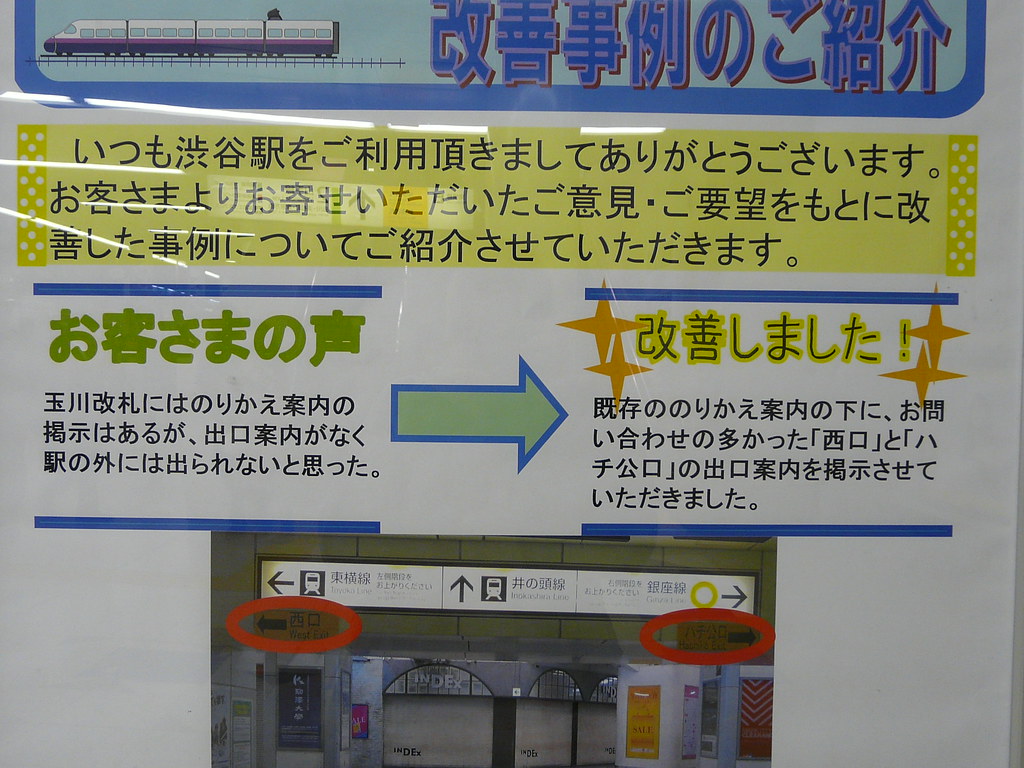
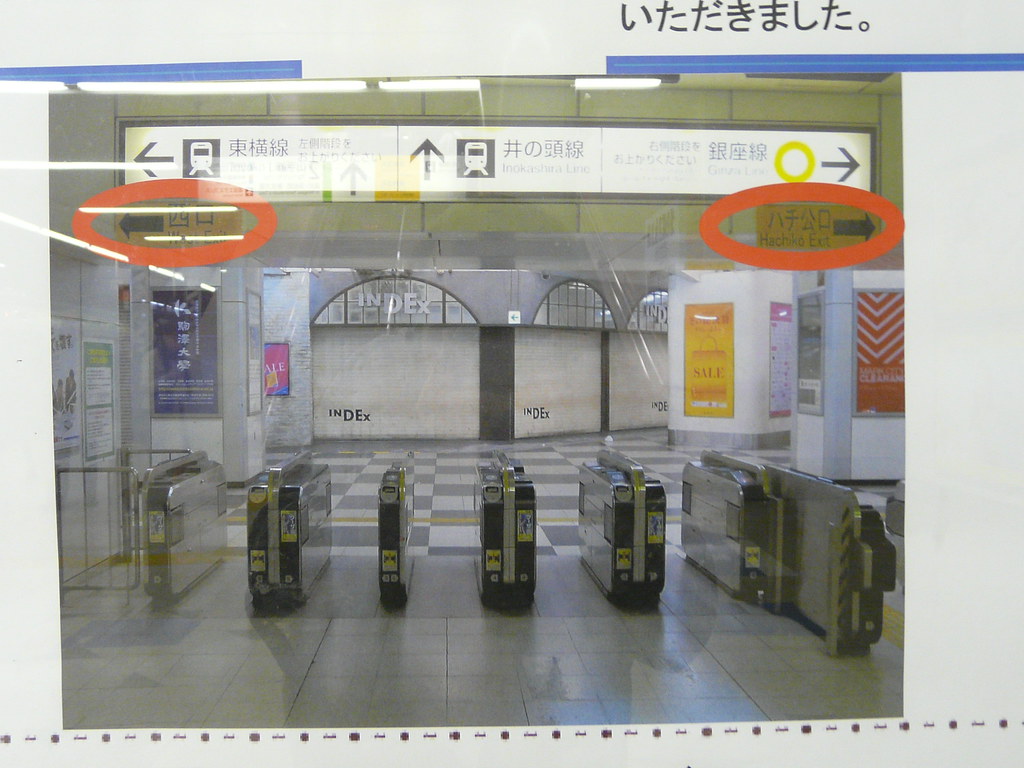
Materials: Laminated Paper
Location: Shibuya-ku, Tokyo
PET bottles filled with water, a pot, a brick and a post all convey the message of the local residents to cars – “No Thoroughfare!”
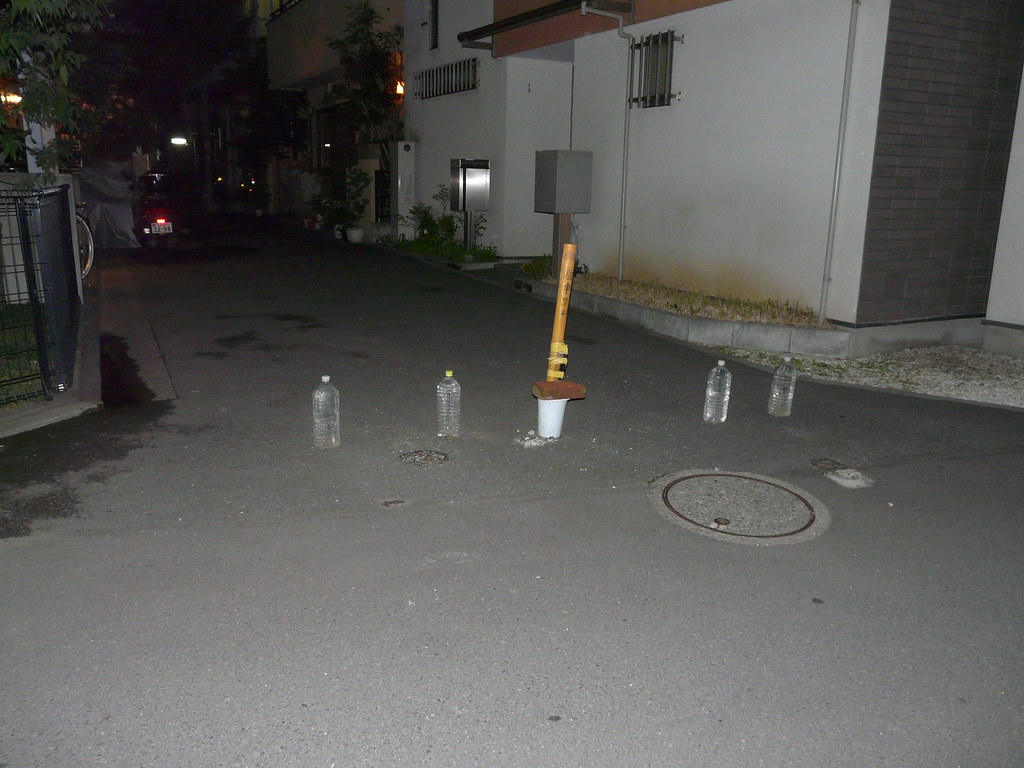
Materials: PET Bottle, Pot, Brick, Post
Location: Nakano, Tokyo
Three years ago today Tokyo Green Space gave me much needed motivation with this lovely introductory post – Thanks Jared!
A-small-lab, Chris Berthelsen’s creativity research and practice studio, has just launched an amazing blog called Fixes. Fixes investigates and documents “alterations of space/objects at the public/private boundary in suburban Tokyo.”
There are many creative examples of people using simple and recycled materials to improve spaces outside homes and shops in a residential area. A wire coat hanger stores outdoor sandals on a beam, someone creates a wood stand for plants and bbq seating on top of a driveway boundary, a gardener recycles plastic storage containers for garden edging, and, above, someone uses a cinder block to even out the entry stairs to a residence.
Chris has an amazing eye for the creativity of Japanese people making small changes to their environment and blurring the boundary of private and public space. This blog project is simply genius.
Originally posted on Tokyo Green Space
Park bench constructed from household seating and plastic twine.
See “Bus stop chairs are gifted, unmatched, and spontaneous” for an insightful take on the subject (on Tokyo Green Space).
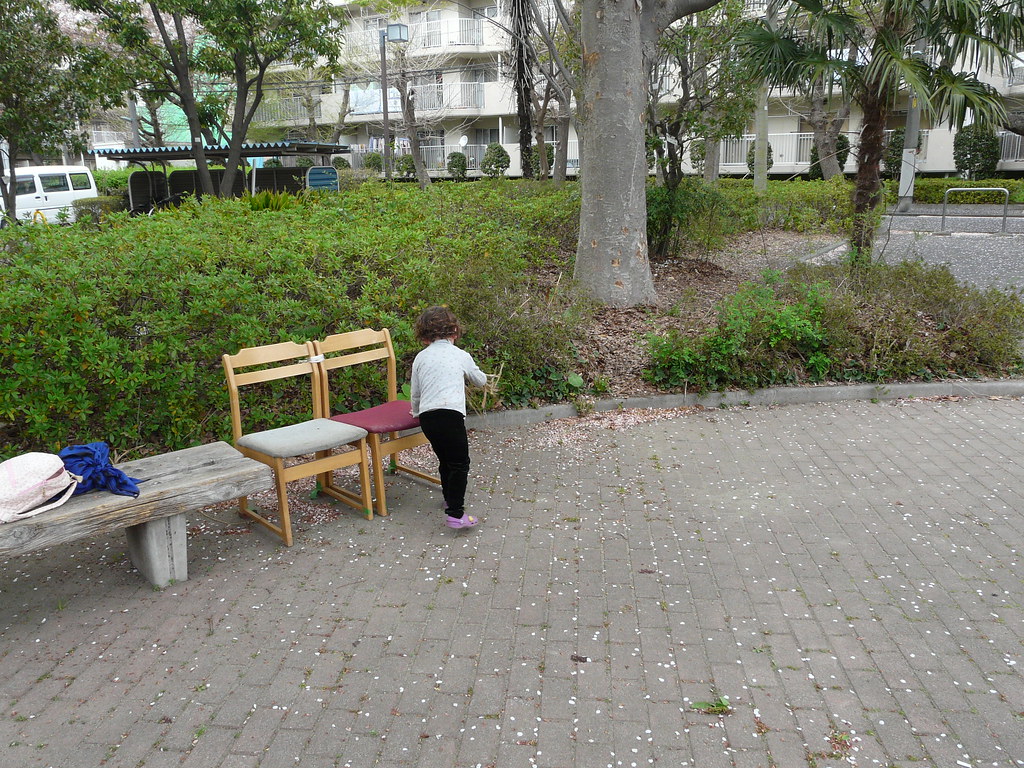
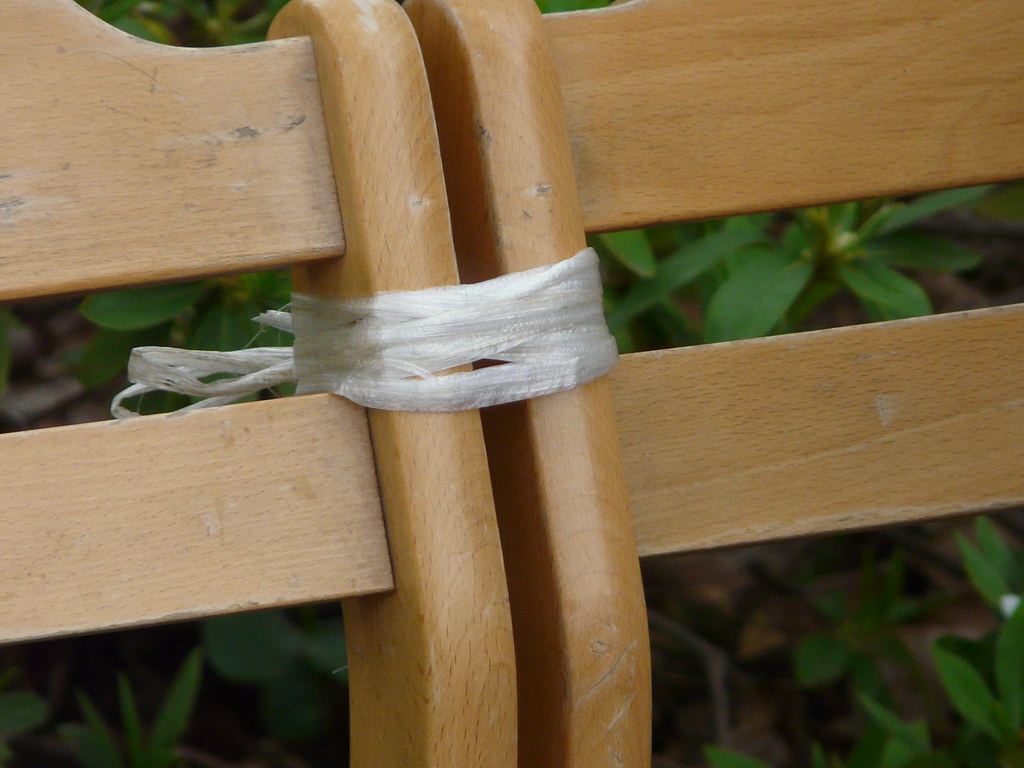
Materials: Plastic Twine
Location: Akishima, Tokyo
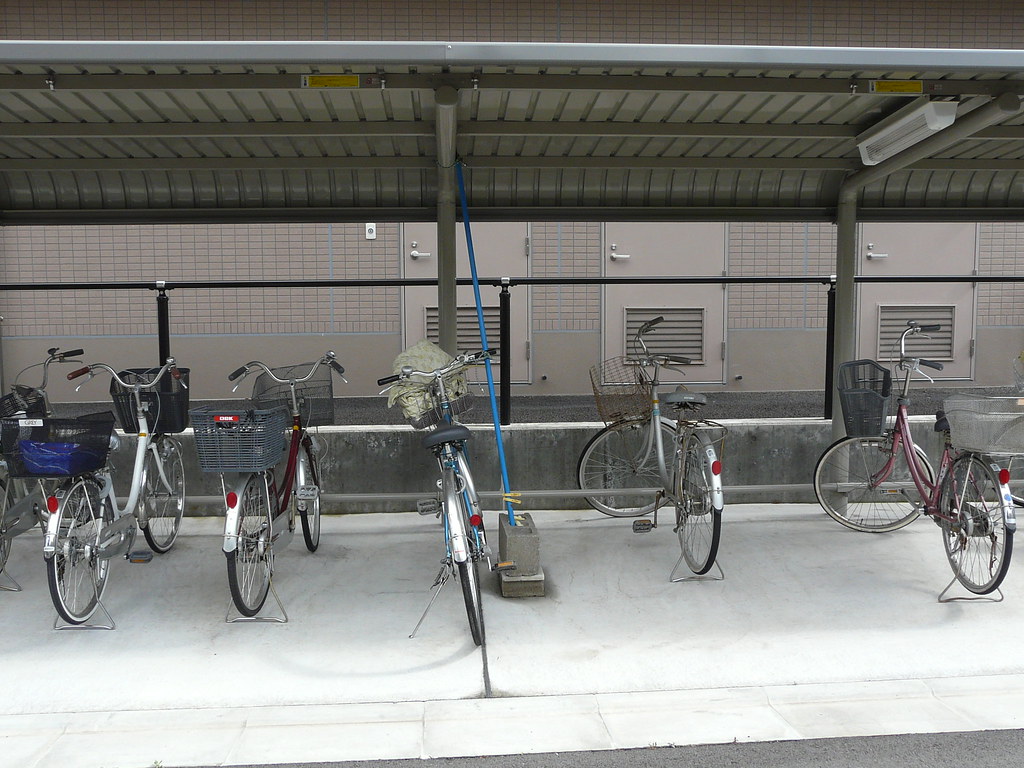
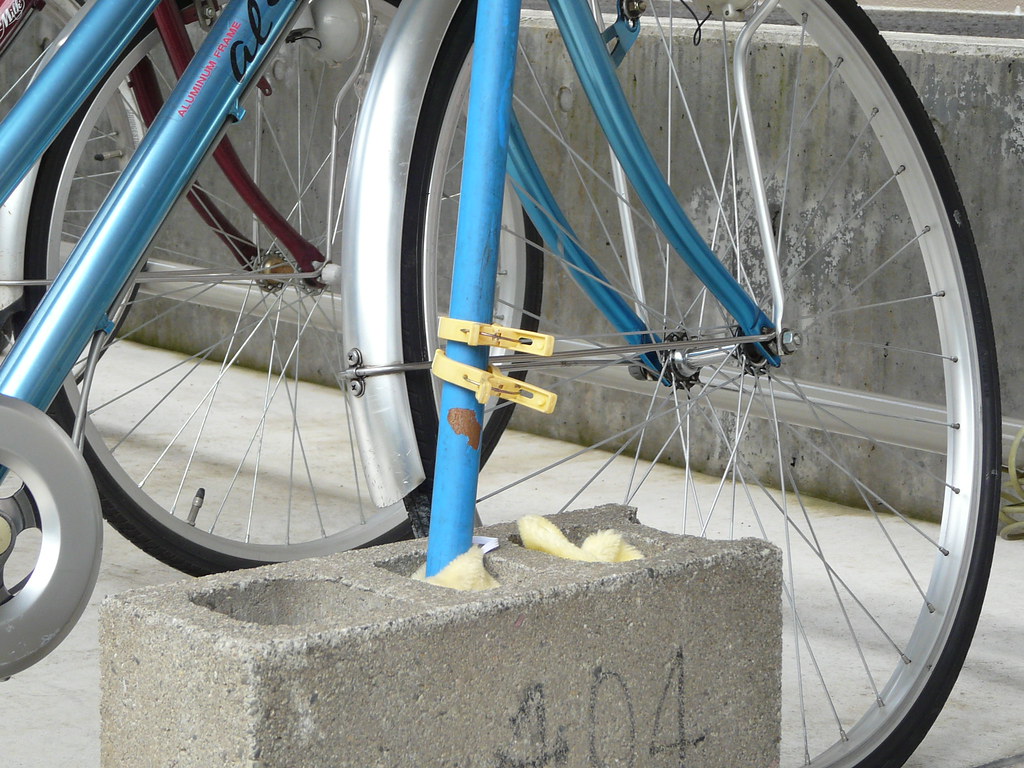
Particularly intricate stabilisation system for parked bicycle. Prevents the bicycle blowing over in the wind, or being toppled by other errant parkers. It also provides a central stable element to prevent the whole row of cycles from falling in a strong wind.
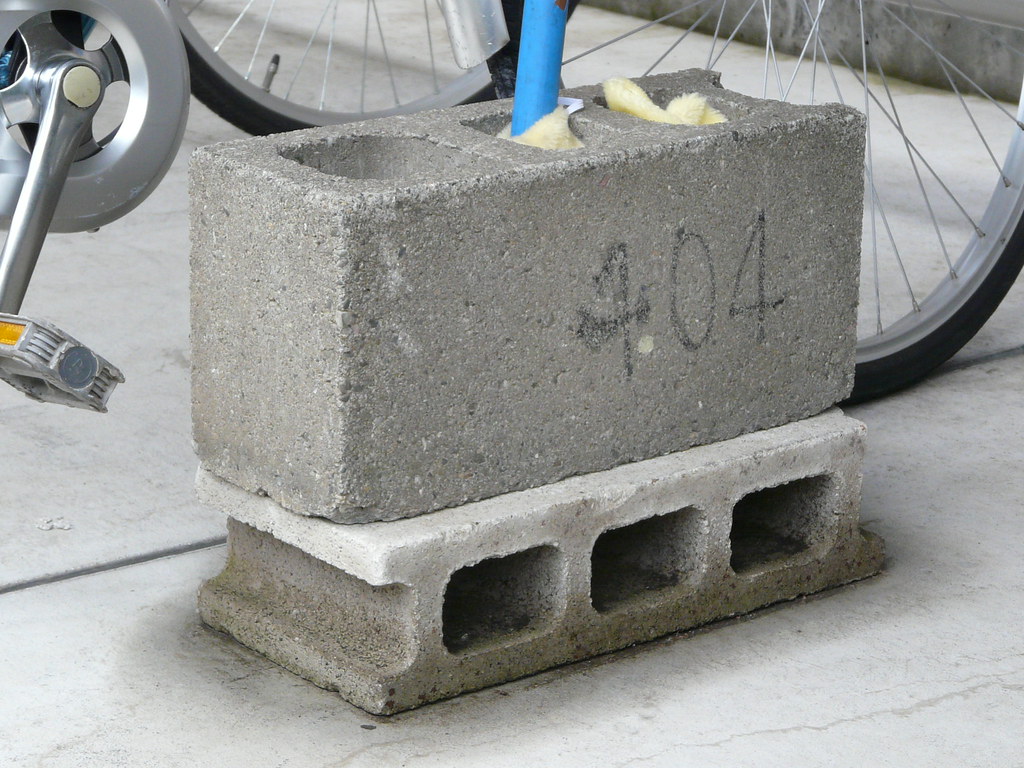
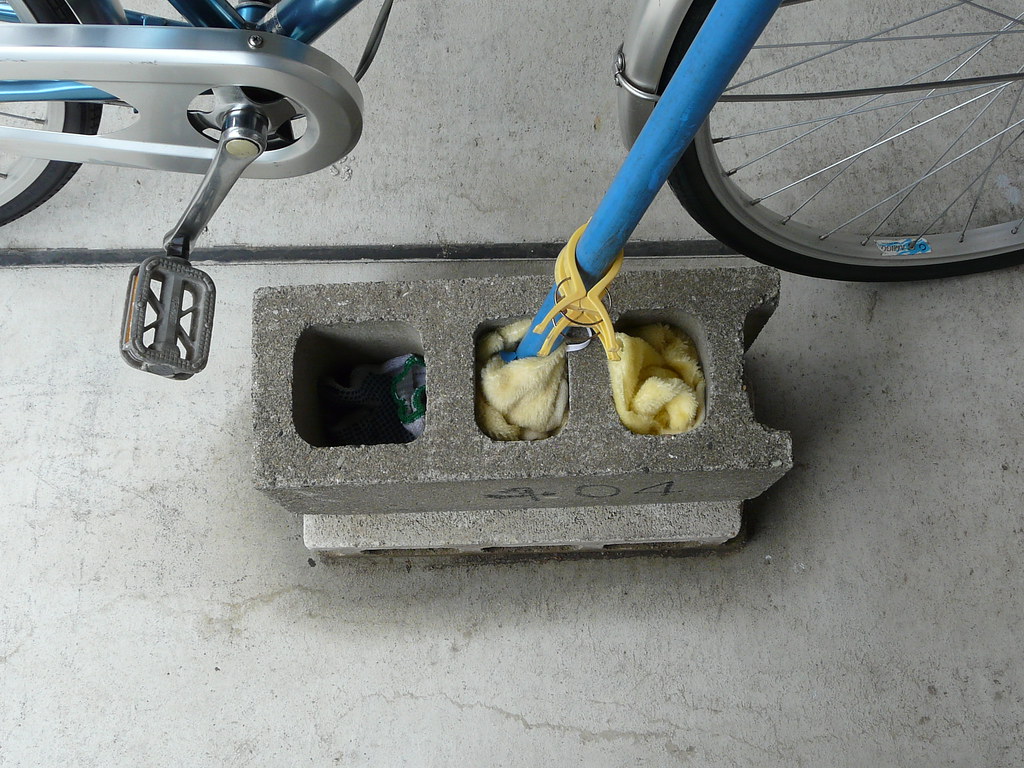
A laundry pole is fixed to the parking structure with bungee cords at the top end. The bottom is stablised with breeze blocks and blanket scraps. The bicycle is attached to the makeshift structure with another bungee cord. The number written on the breeze block denotes the owner’s apartment number. I’m not sure of the function of the pegs and gloves.

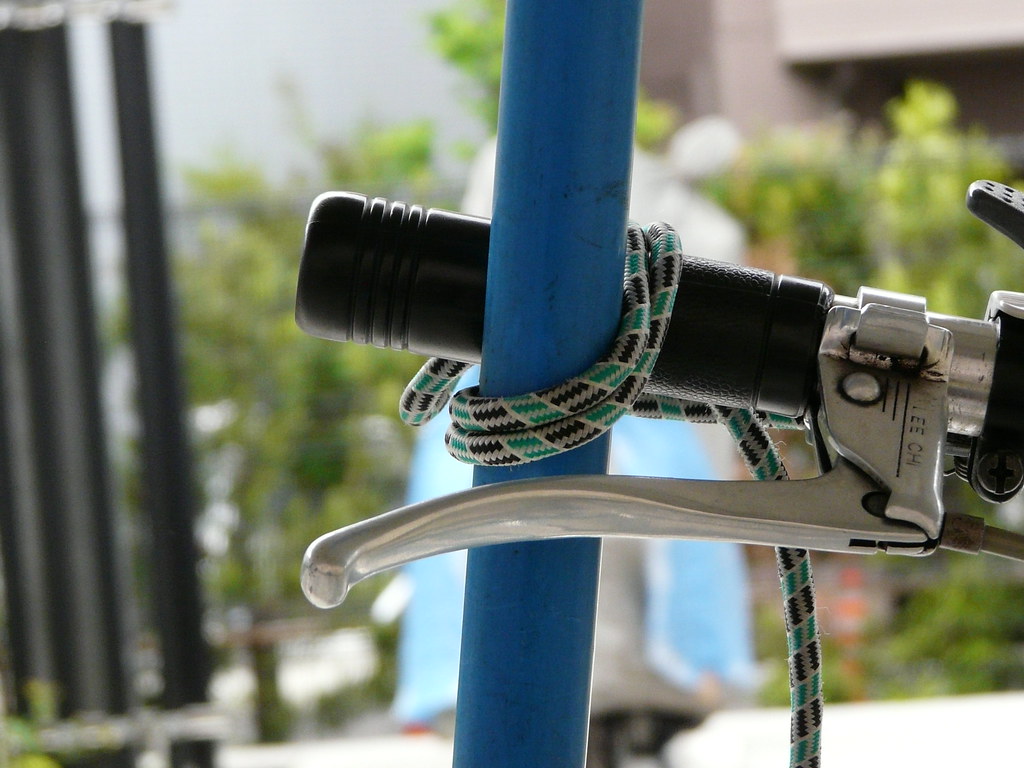

Materials: Breeze Blocks, Bungee Cords, Blanket Scraps, Gloves, Pegs
Location: Setagaya, Tokyo.
This example is a note for a pamphlet on “Hand Made Aspects of Mass Produced Housing”. Subscribe to my somewhat-frequent letter HERE if you want to keep in touch easily.
Pets were kept in the old apartments that were torn down and replaced with this modern complex. Residents were guaranteed a place in the new building, but pets were banned. Empty tuna tins scattered around in the bushes surrounding the apartments are evidence of continued care and mutual dependence.
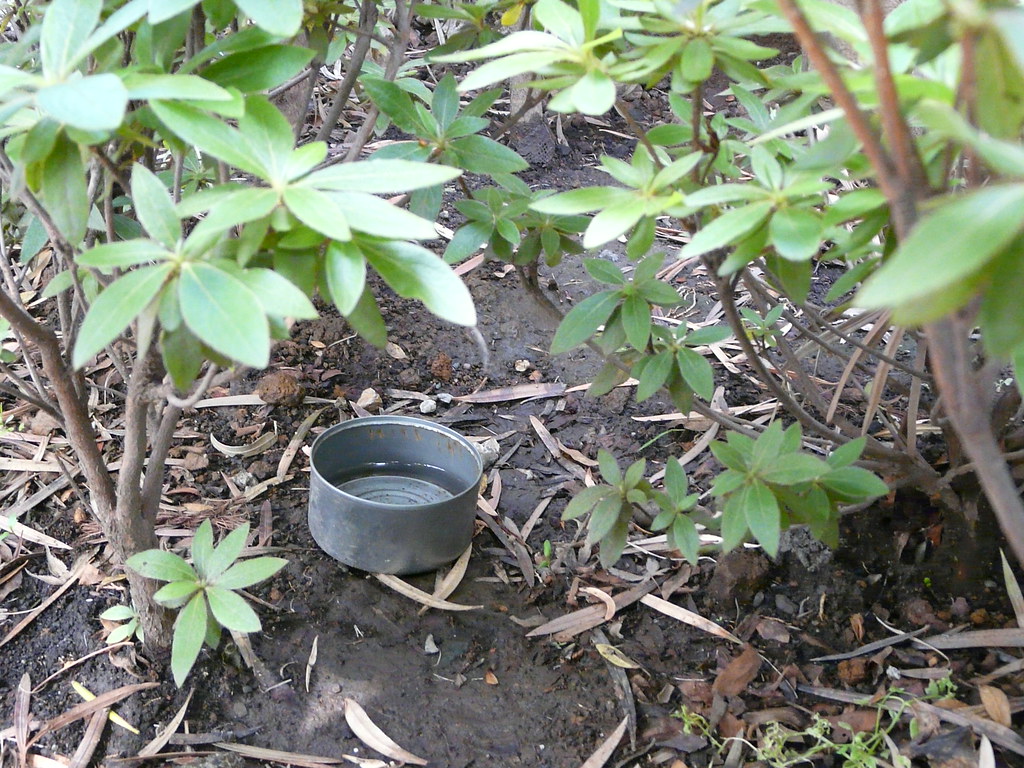
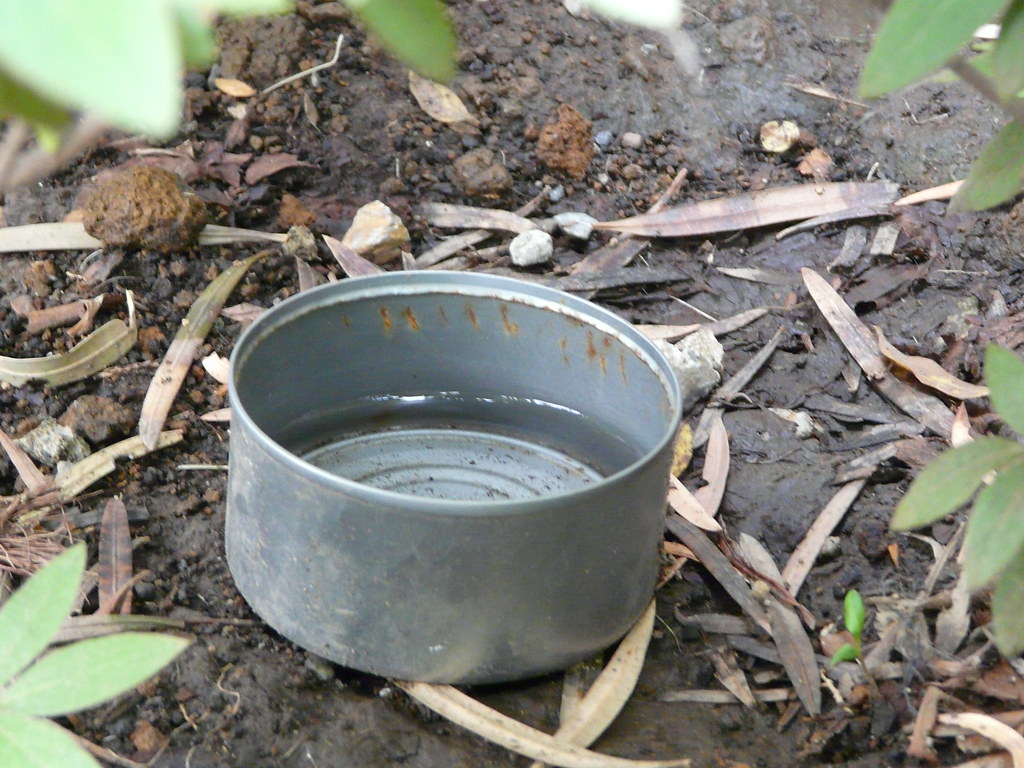
Materials: Cans of Tuna
Location: Setagaya, Tokyo.
This example is a note for a pamphlet on “Hand Made Aspects of Mass Produced Housing”. Subscribe to my somewhat-frequent letter HERE if you want to keep in touch easily.
Painted plate in inner-city residential street.
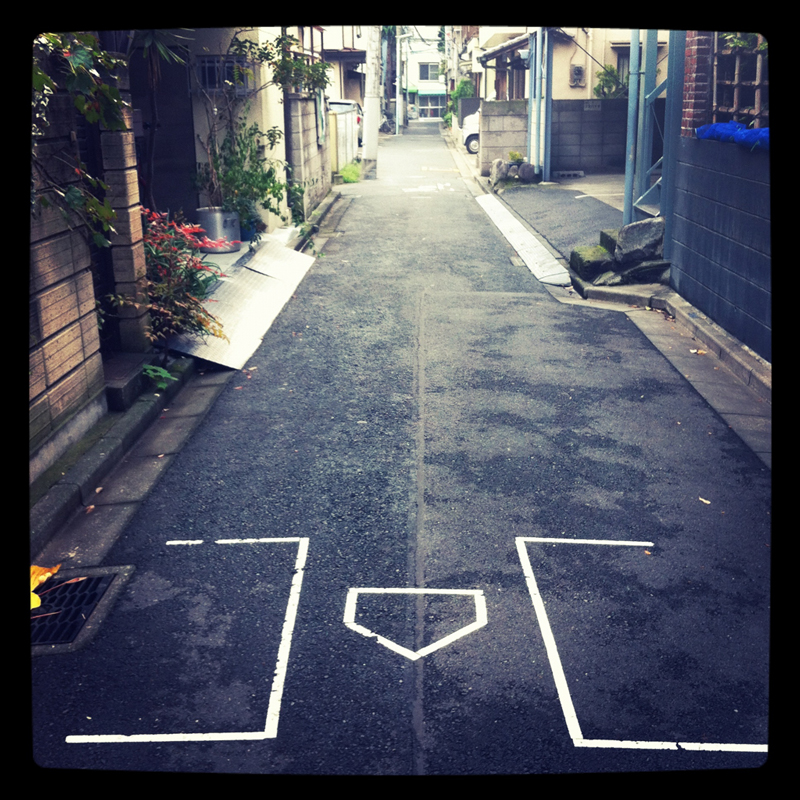
Materials: Paint
Location: Ueno, Tokyo
(Courtesy of Oyl in Tokyo (@oylmiller))
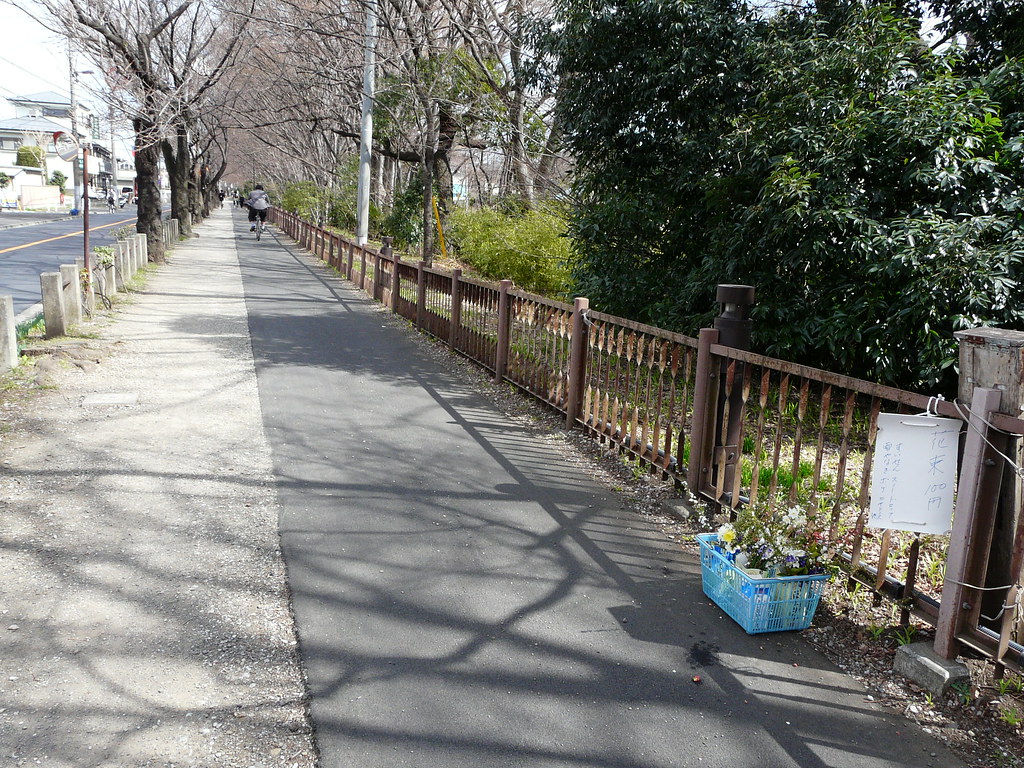
Bouquets in milk cartons, on sale for 100 yen on the side of the Tamagawa Josui walkway in West Tokyo. Relaxed, honesty-box style informal florist makes a delightful addition to an afternoon stroll.
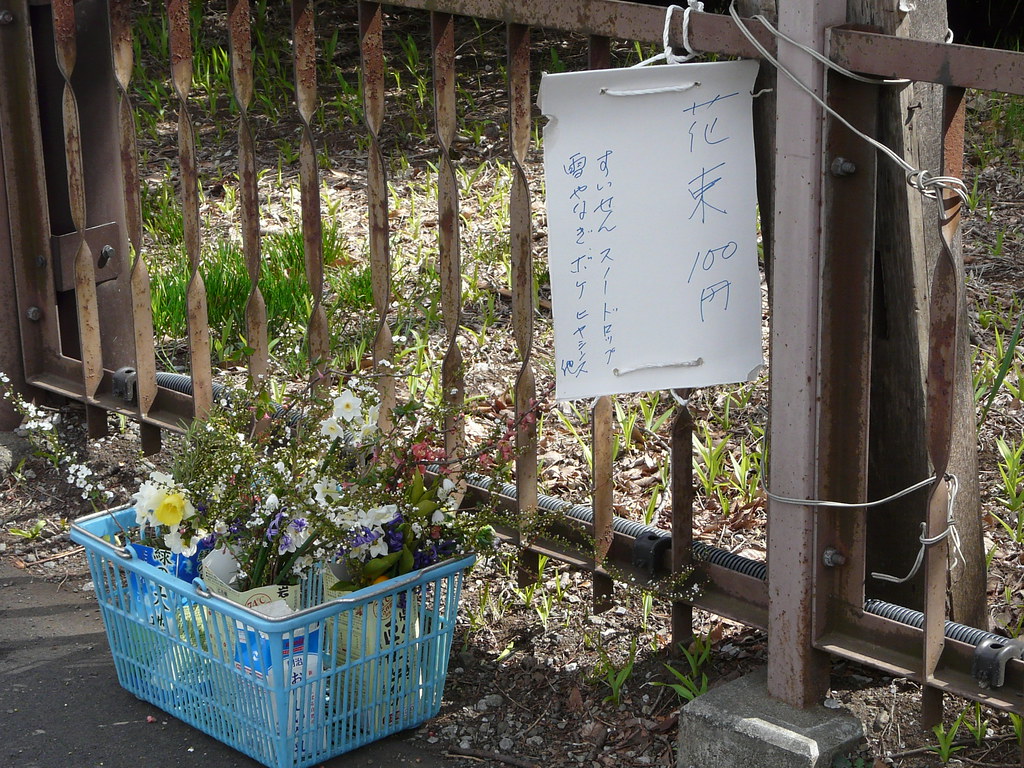
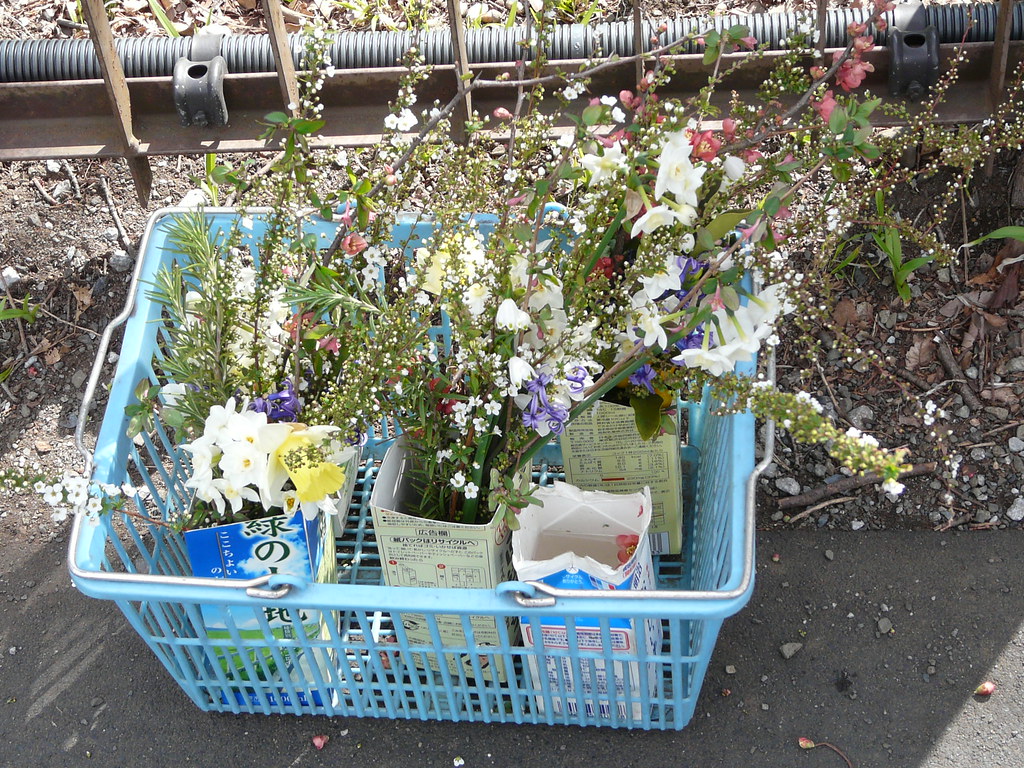
Materials: Milk Carton
Location: Kokubunji, Tokyo
(Originally posted on Tokyo-DIY-Gardening)
Mailbox facing the city street latched shut with a twist of rope.
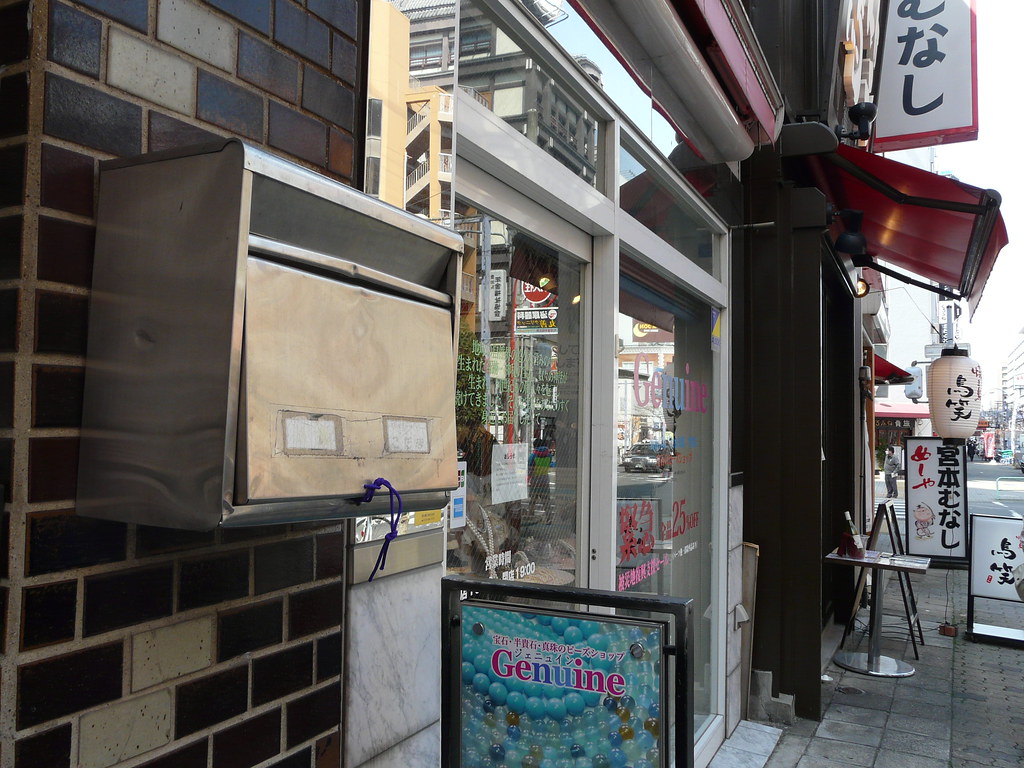
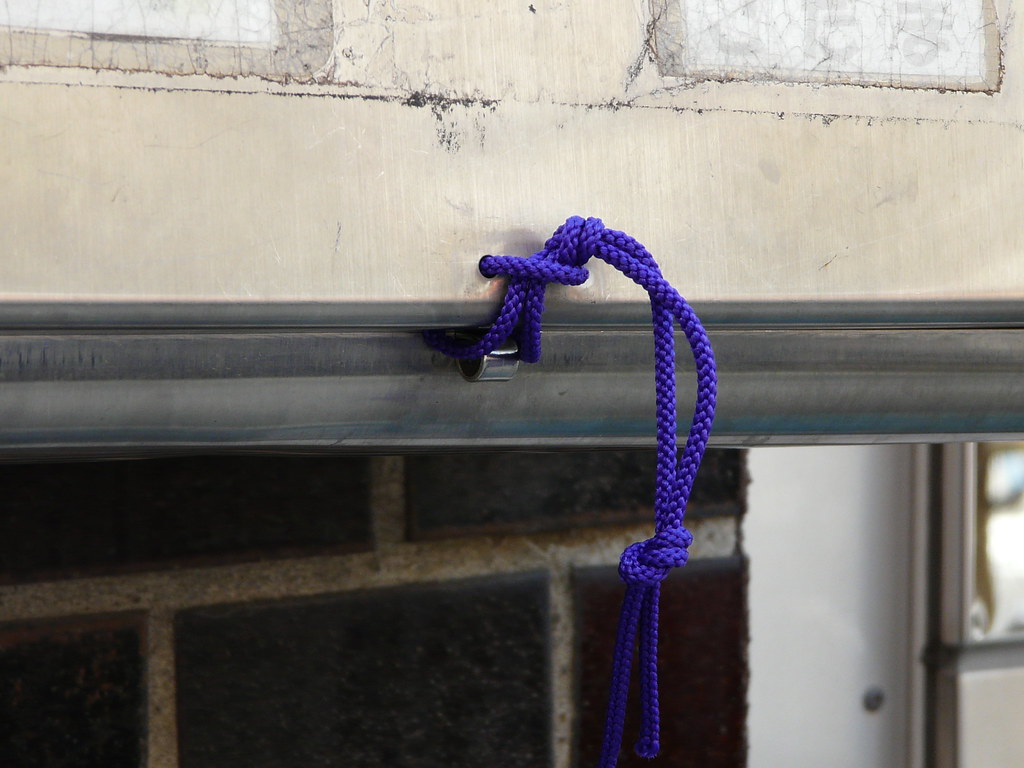
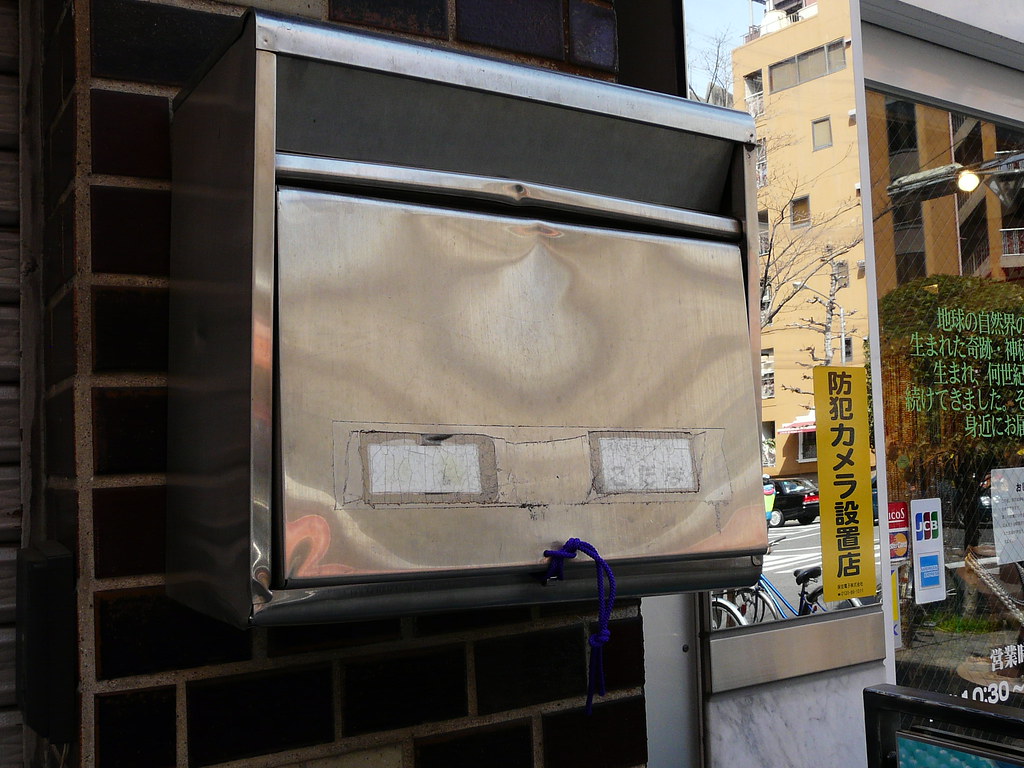
Materials: Rope
Location: Central Nagoya
Several oil cans cut apart, joined together with duct tape and painted form a large commercial-use outdoor rubbish bin.
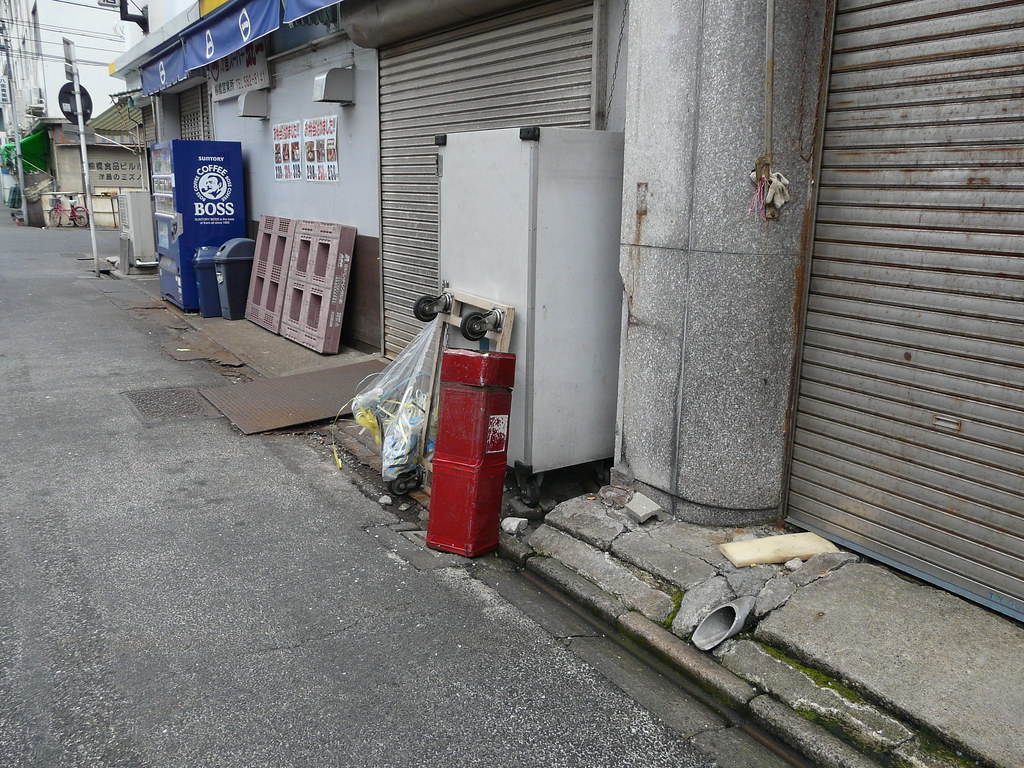
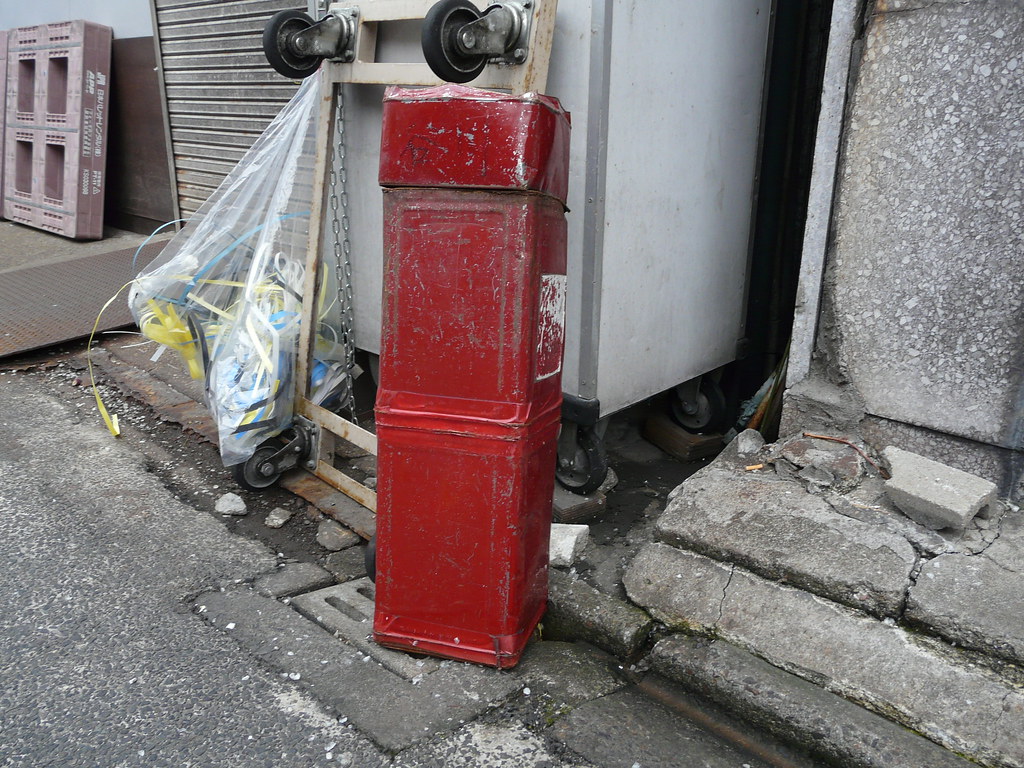
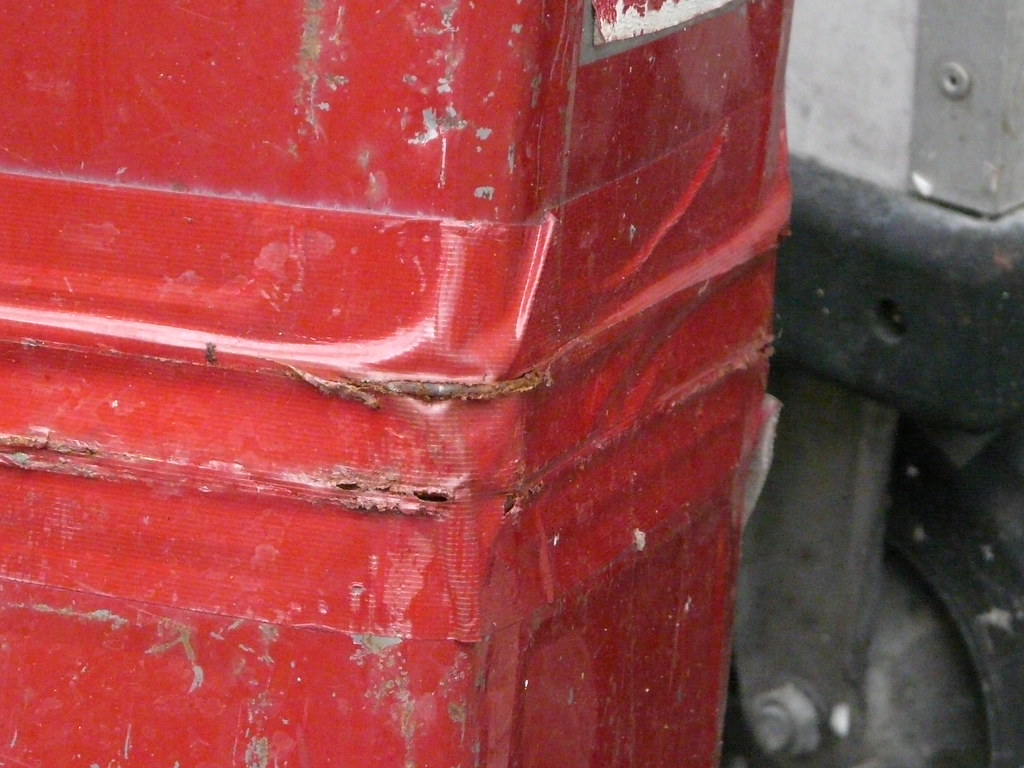
Location: Nagoya
Materials: Duct Tape, Oil Can, Paint
Frugal hanging garden constructed from three types of wire and a metal ring that was once used to secured a roll-up canvas awning.
Simple, robust, flexible.
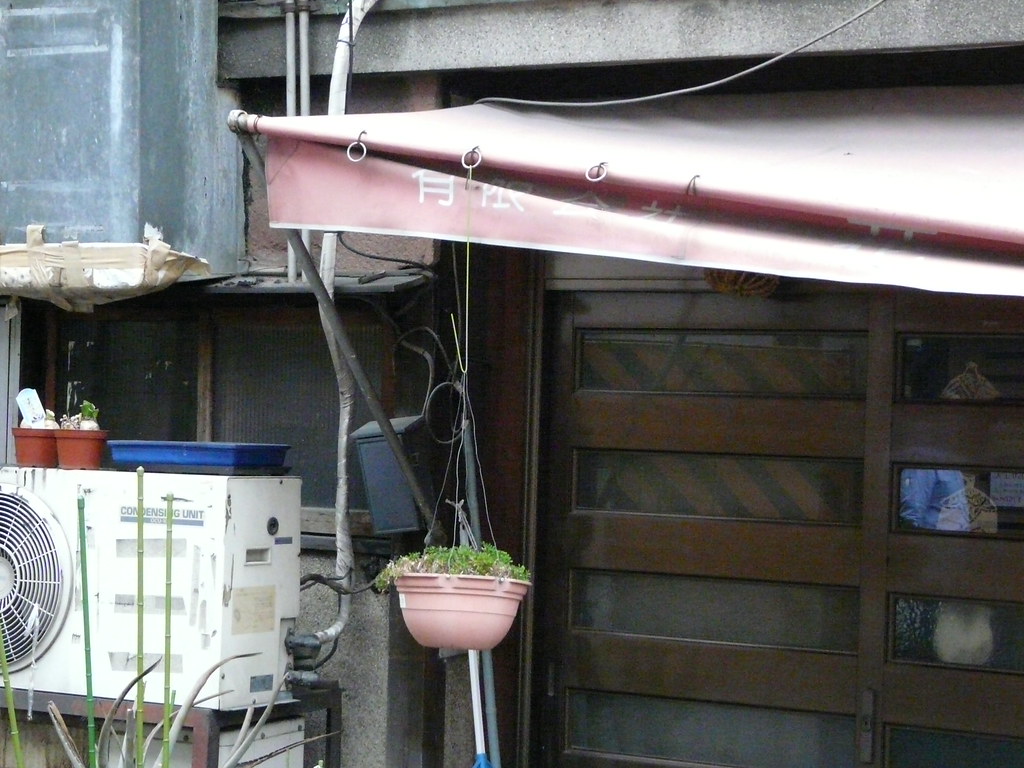
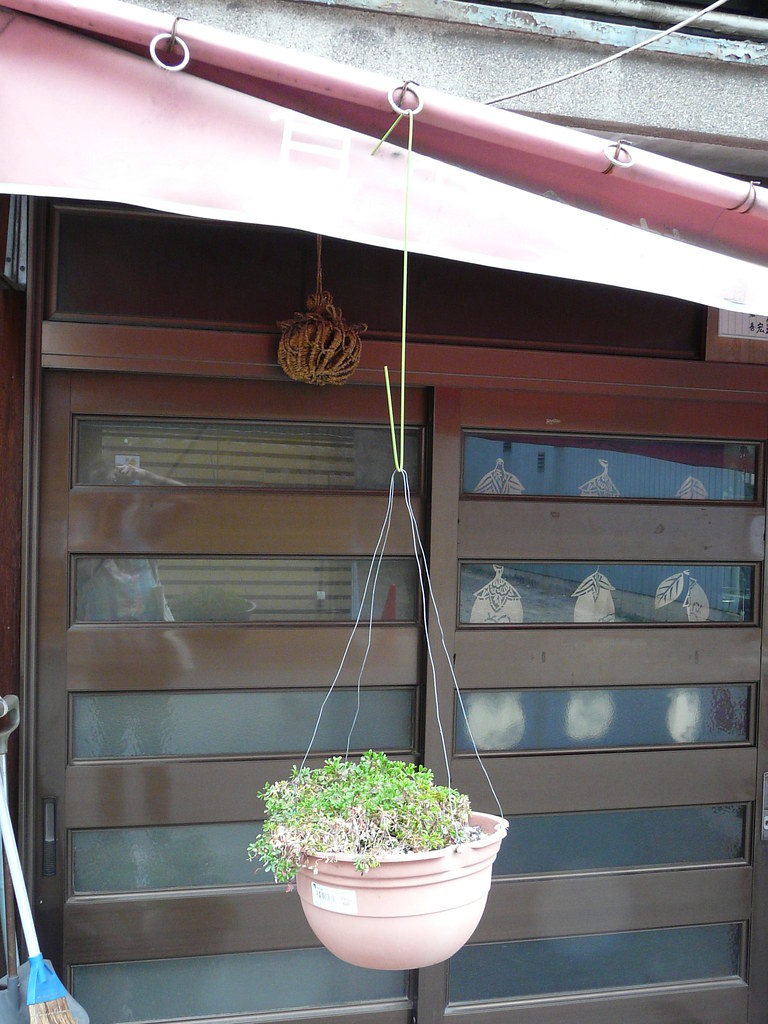
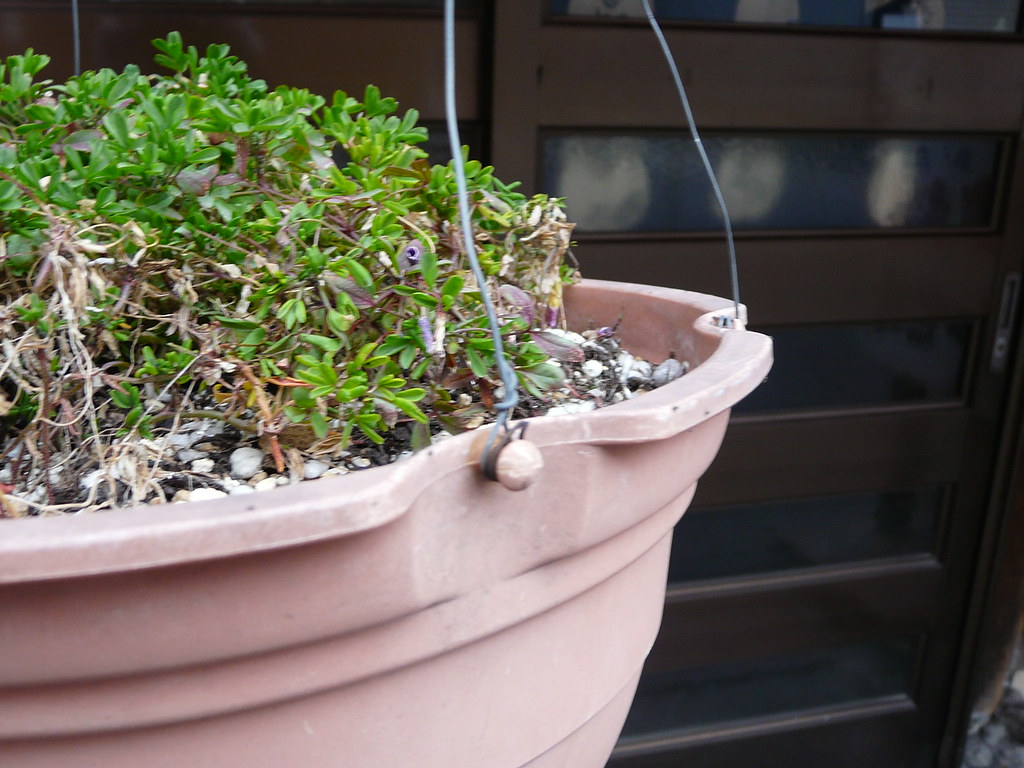
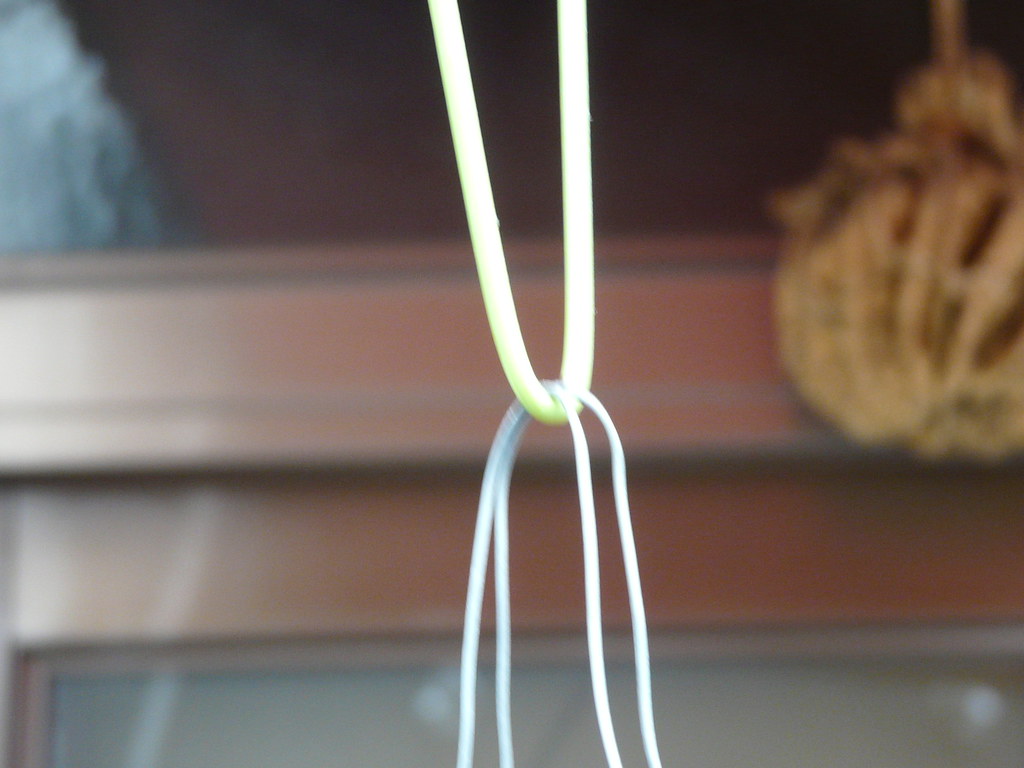
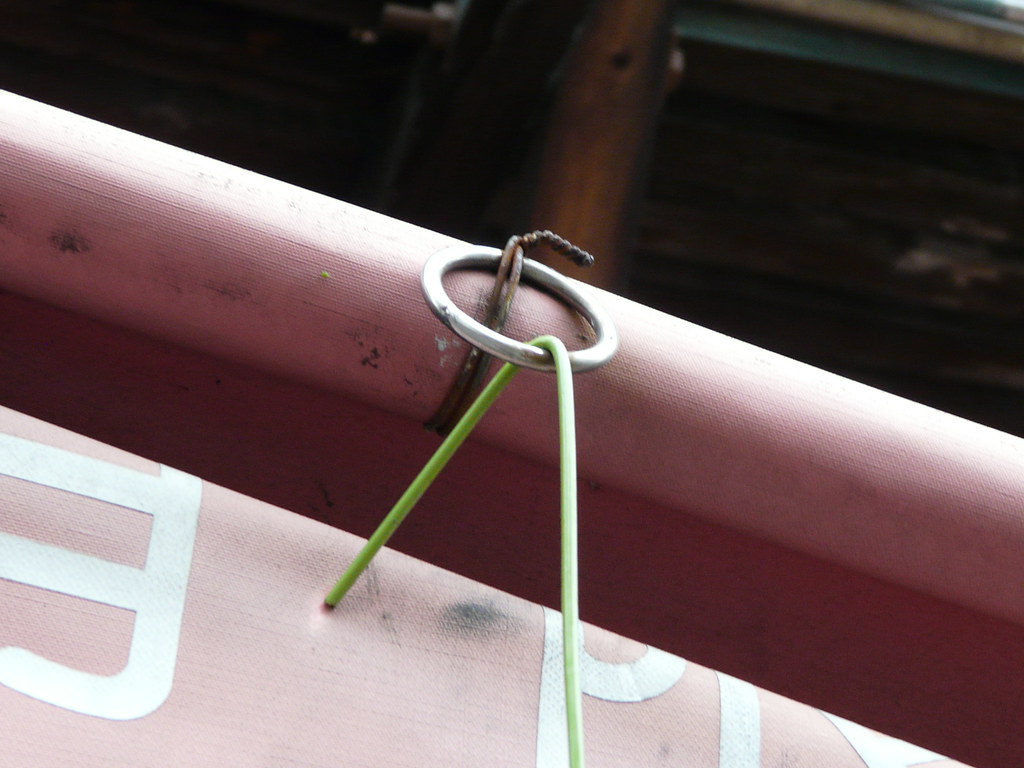
Materials: Wire, Metal Ring
Location: Nagoya
The dog has the run of the yard – kept in check with wire racks on the gate and a breeze block for stability.
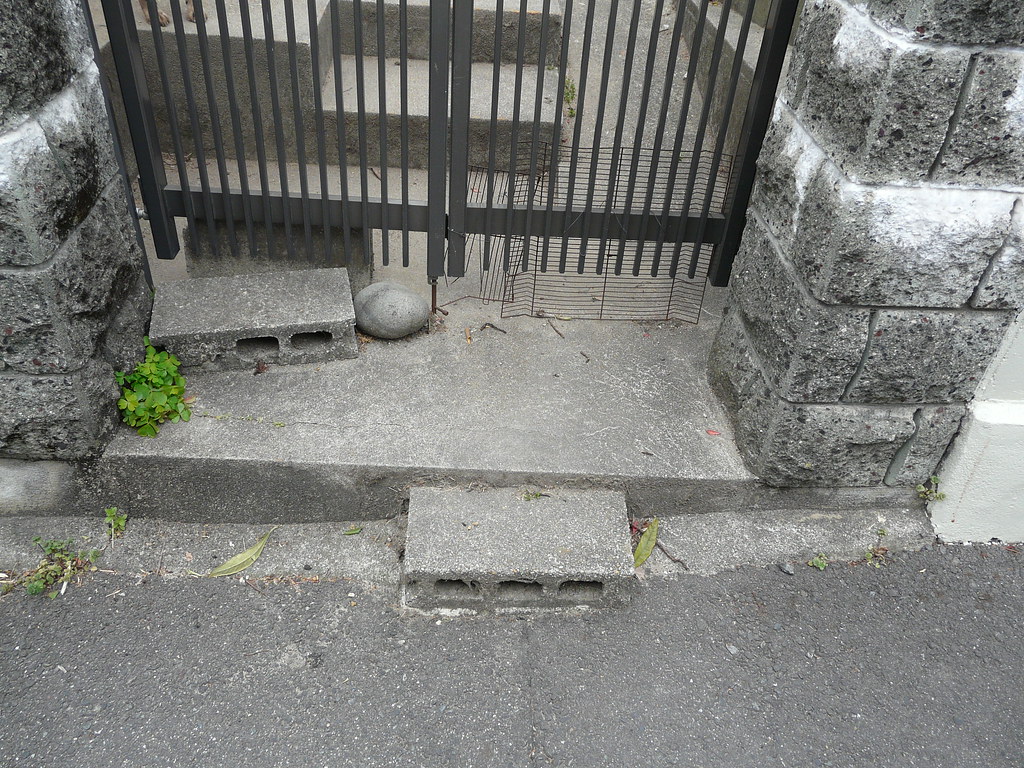
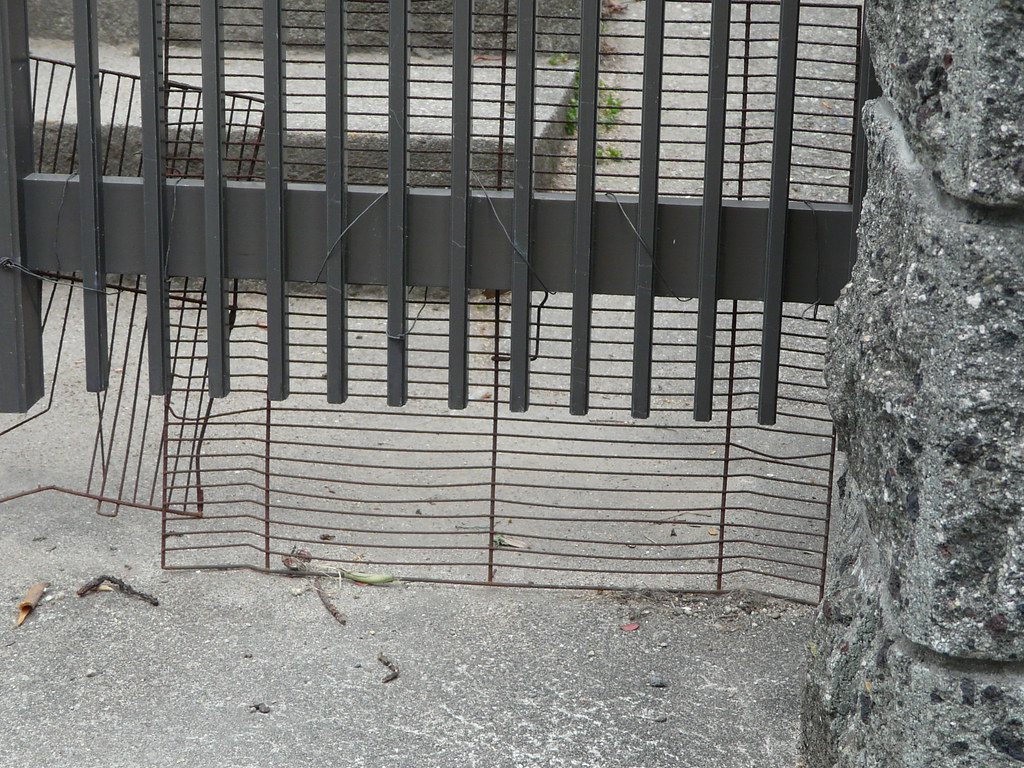
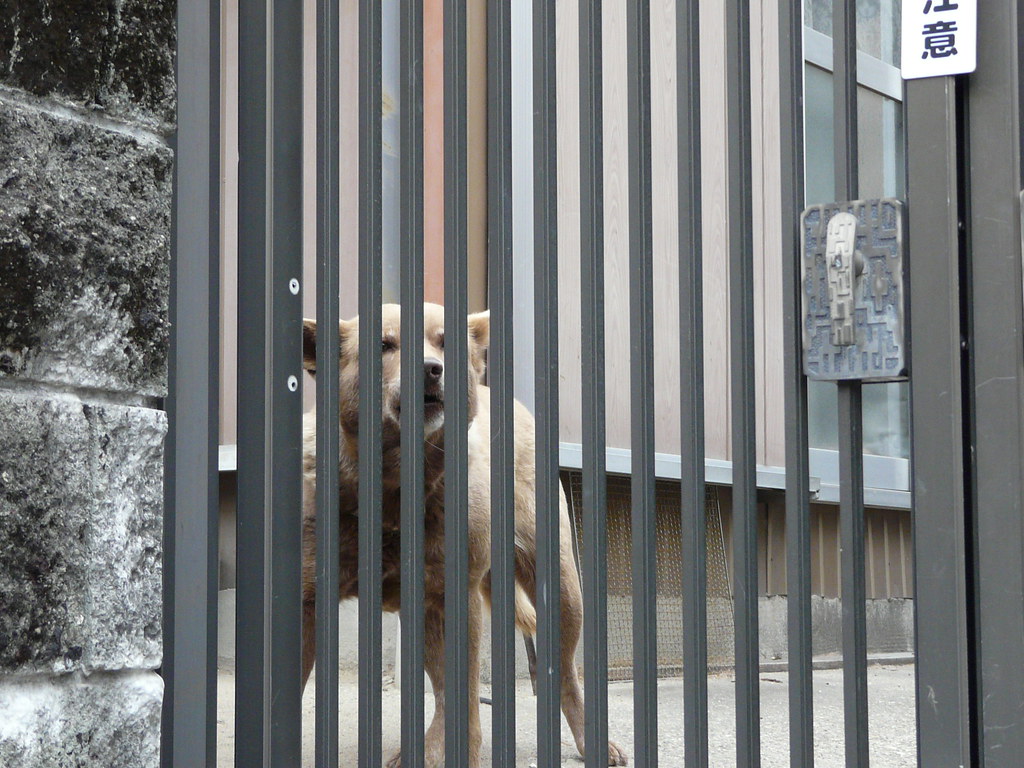
Materials: Wire Rack, Breeze Block
Location: Nagoya
This rambling garden along a strech of 4-lane residential road illustrates the blurred, conjunctive nature of Tokyo gardening (although this example is from Nagoya).
Pots, blocks, dirt and plants sit, stand on and burrow over and into each1 other in a rich semi-autonomous mess. Compare this to the modular, constrained and connected formal gardens and green spaces of the financial district.
1. from Shelton (1999)
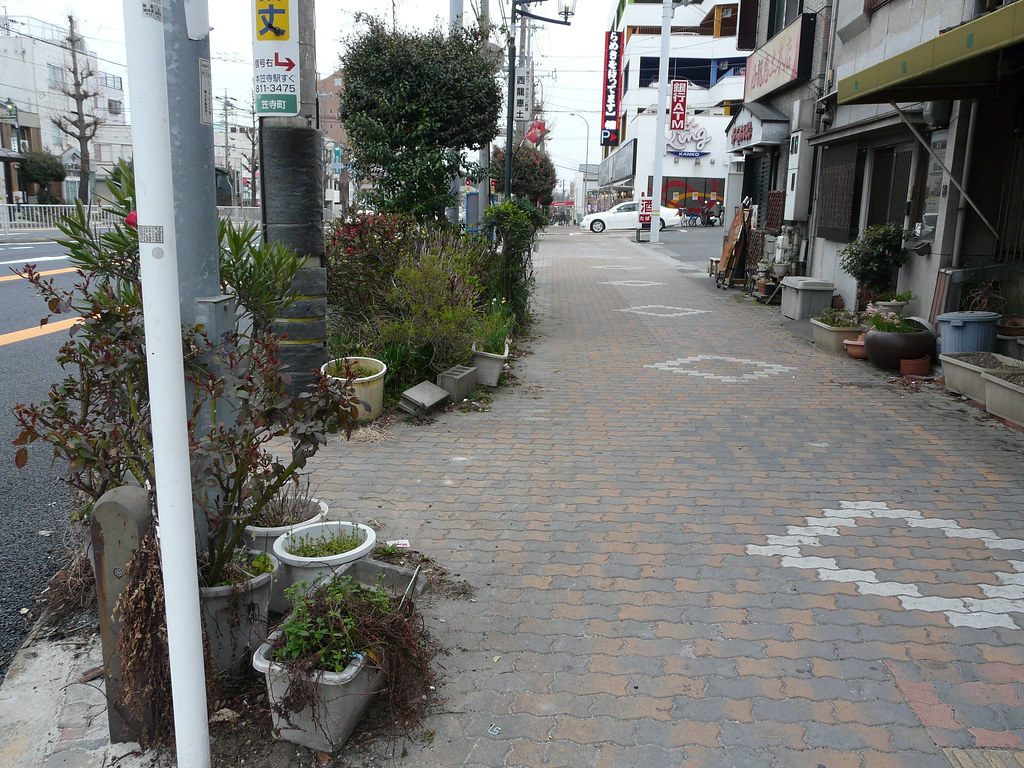
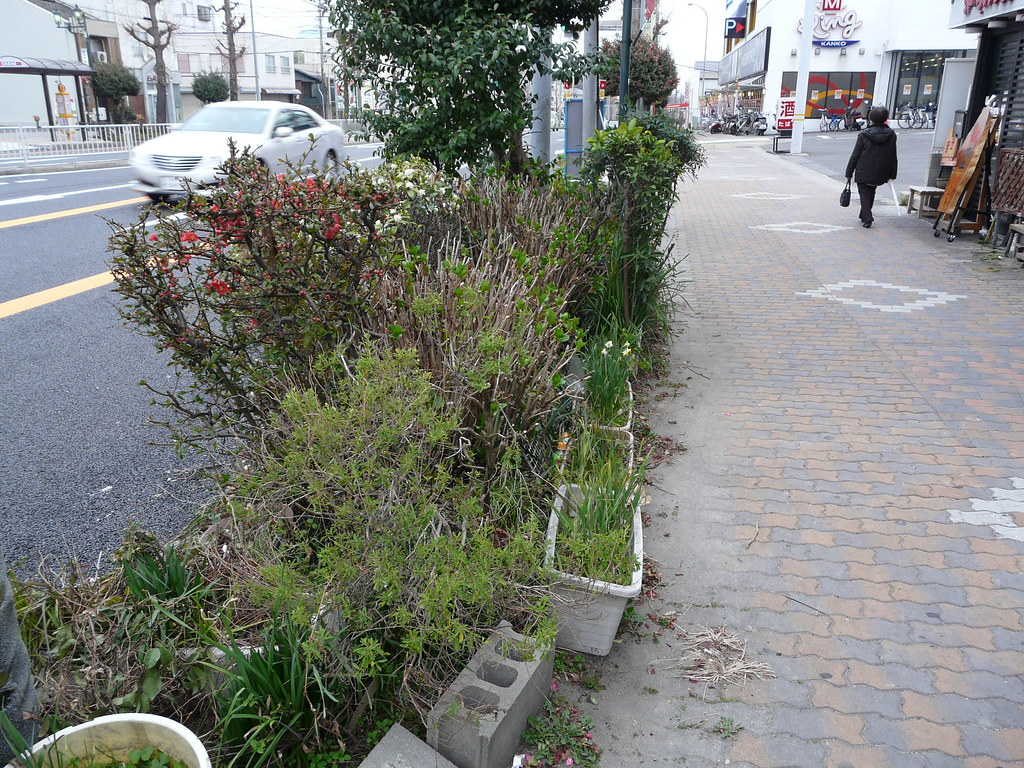
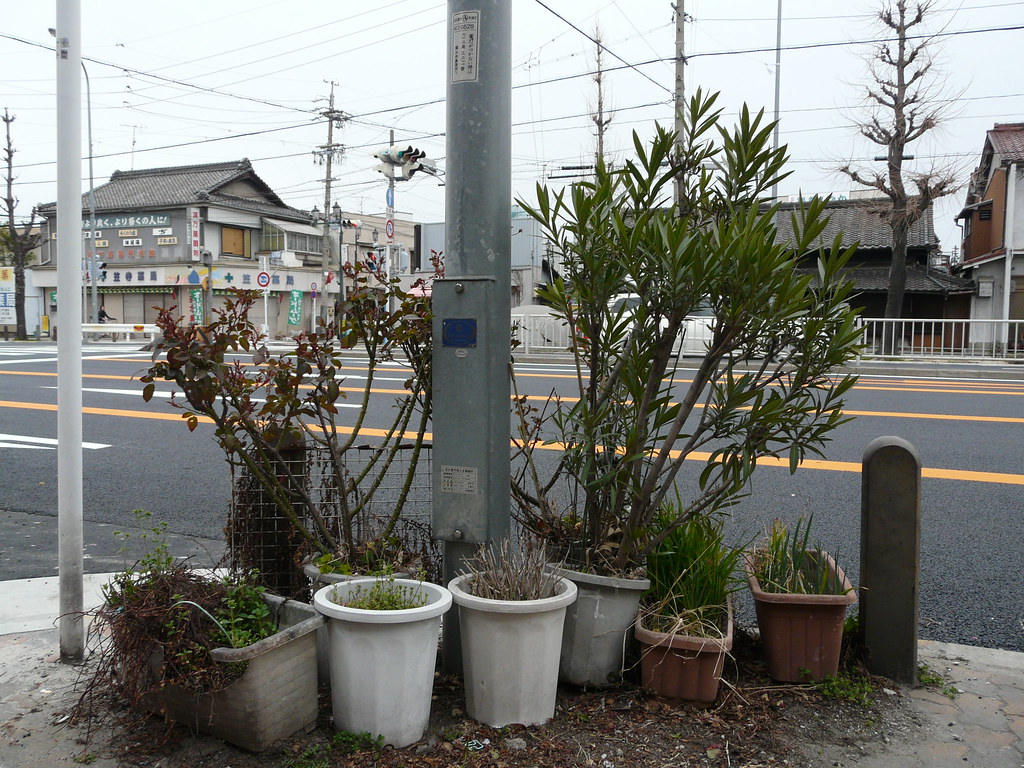
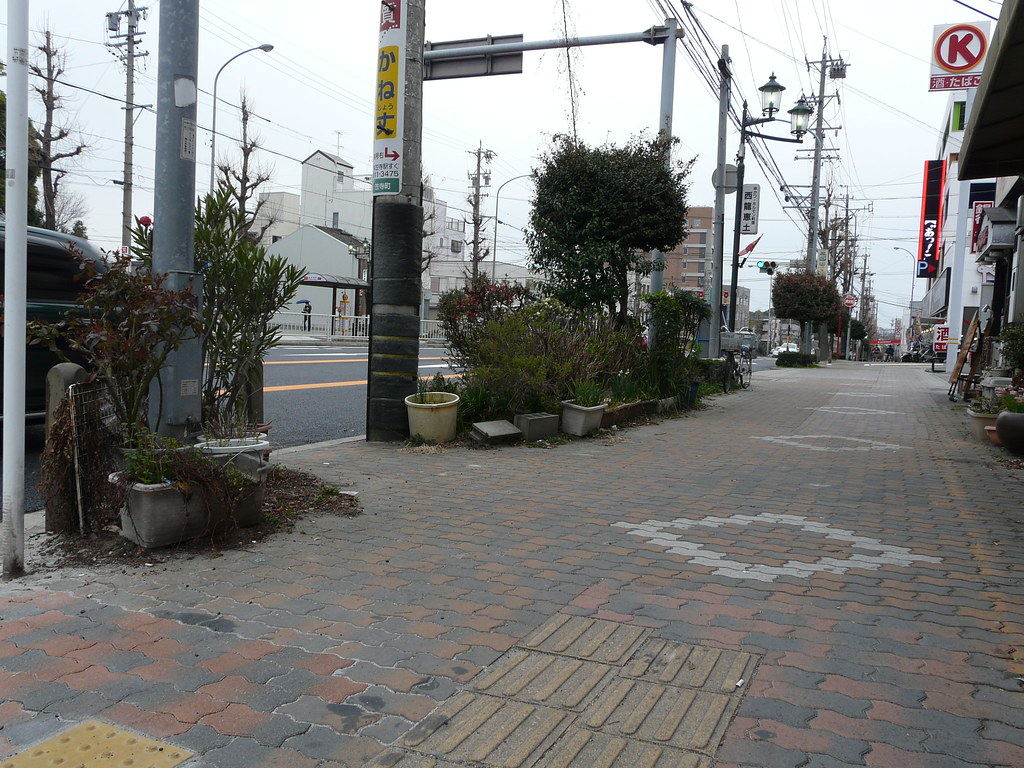
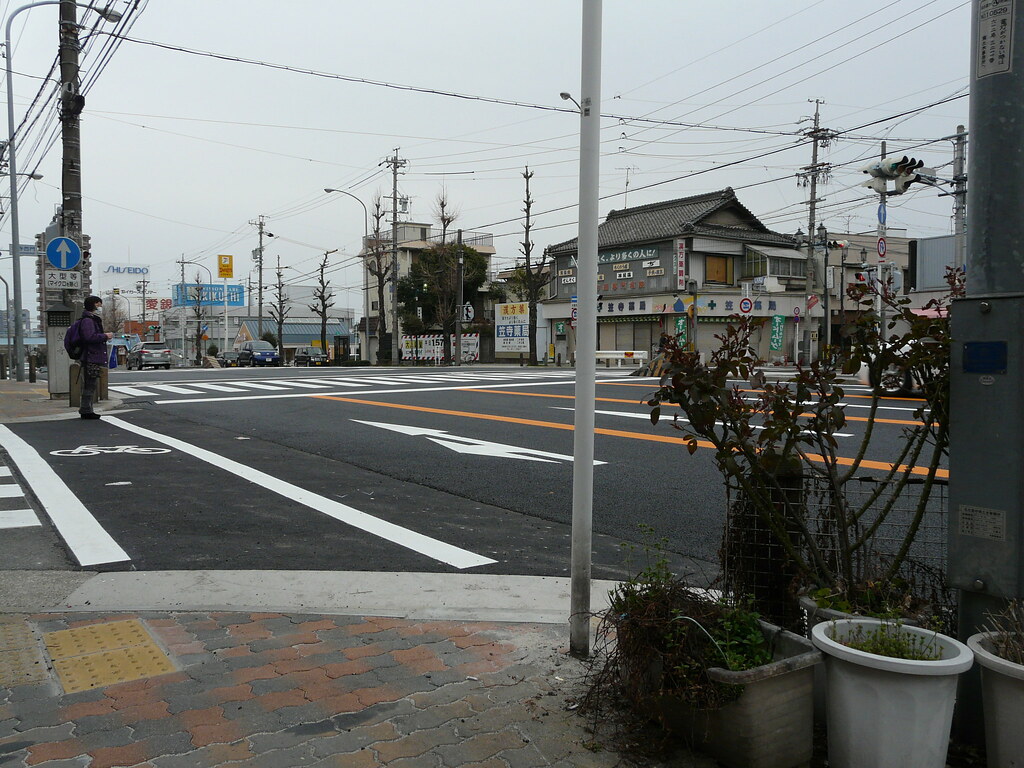
Materials: Pots
Location: Nagoya
Maintenance times; No smoking!; Be careful if you’re wearing sandals!; Hold the handrail!; and of course – No Walking! No Running! – just stand still…..don’t move…..
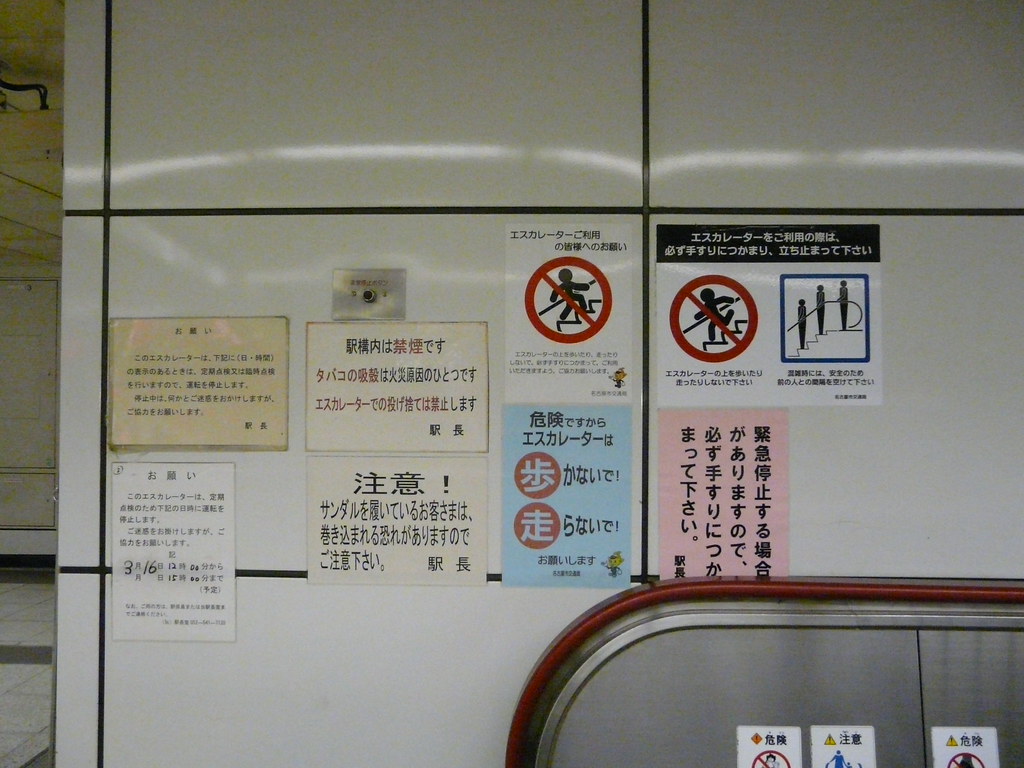
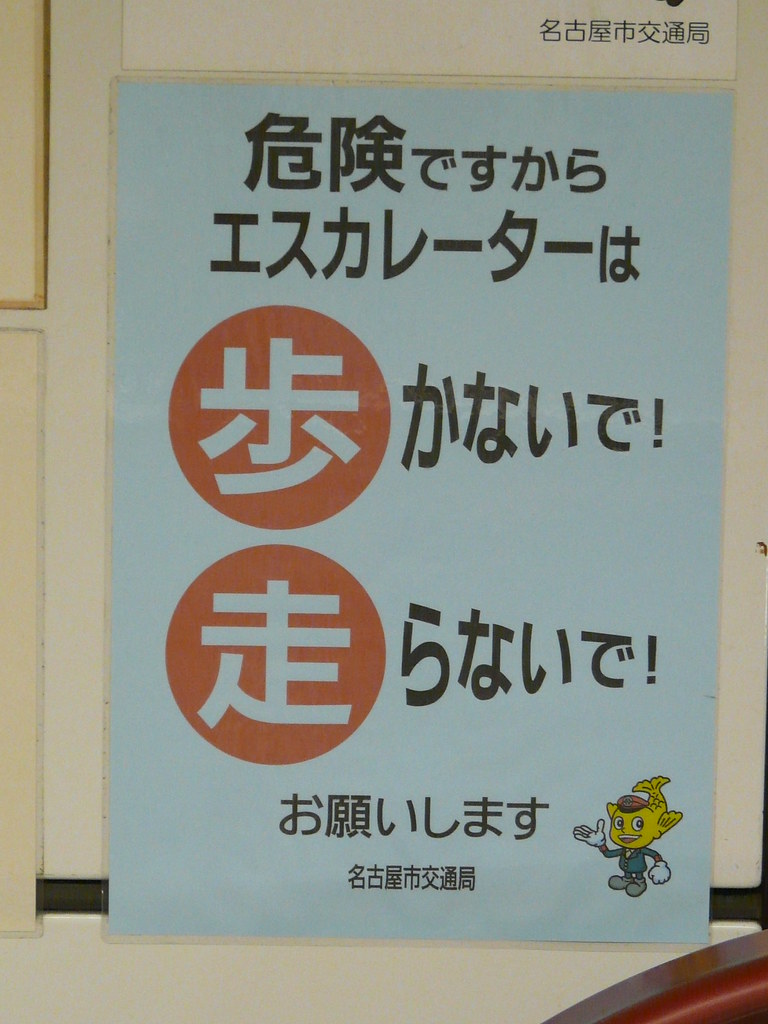
Materials: Laminated Paper
Location: Nagoya
Lack of public seating in Tokyo necessitates improvisation for a morning smoke, drink and relax after the tiring commute. Perhaps this deficiency in urban furniture is actually a blessing, allowing for more flexible and frequent seating opportunities. Less predefinition can equal greater malleability.
Materials: Metal Railing
Location: Shibuya, Tokyo